Review by Hadou Brunner (PimpYourRide)
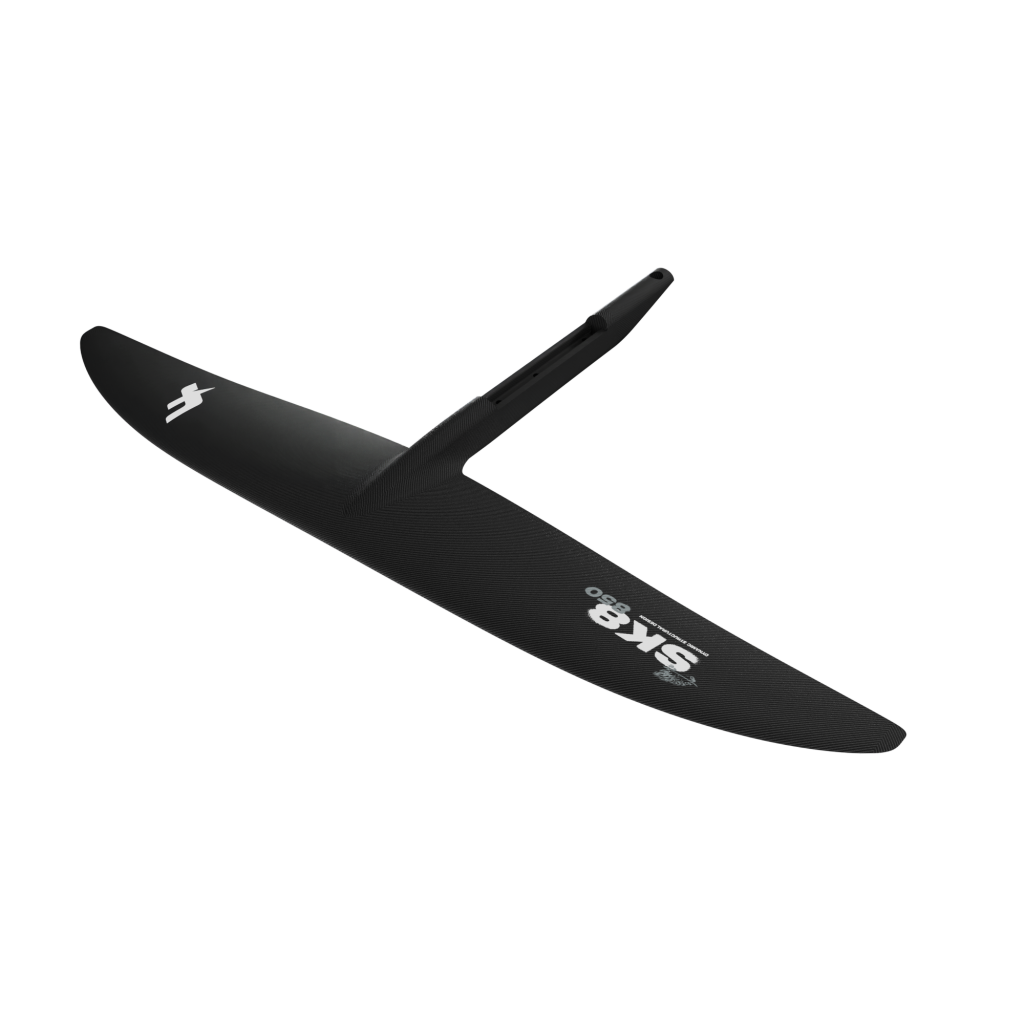
The SK8 is one of those foils widely discussed in the community. Since its first version, it has established itself as the benchmark for riders primarily looking to surf their foil, in both wing and prone. With the V2, F-One promises a subtle but significant evolution. So, what really changes, and is it worth it?
To answer, we rely on the complete review by Hadou Brunner, a prominent figure in French-speaking wingfoiling. His channel PimpYourRide is a reference for its uncompromising field analyses. This article faithfully reflects his feedback after several sessions on the F-One SK8 V2 750. Many thanks to him for this review.
In Summary
The F-One SK8 V2 remains the carving benchmark at F-One. The new carbon layup provides more stiffness: more direct pumping, improved pitch stability, and instinctive rail-to-rail. It's the ideal foil for those who want to surf with wing or prone, less suitable if you're looking for downwind or long-distance pumping. Price: €696 to €841 with the current -15% sale.
Highlights and Limitations
- Highlights: precise and intuitive carving, exceptional pitch stability, improved pumping vs V1, allround wing/surf.
- Limitations: energy-intensive for long-distance pumping, not suitable for pure downwind, intermediate level and above required.
Quick facts
Brand: F-One · Range: SK8 V2 · Sizes: 650 to 1050 cm² · Aspect ratio: 8.0 · Price: €696 to €841 (-15%) · Level: intermediate to expert.
What's new between the SK8 V1 and V2
The first question we all ask ourselves: is it worth upgrading from V1 to V2?
Hadou is clear: the shape remains identical. Same profile, same outline, same basic feel. What changes is the construction. F-One has revised the carbon layup to achieve a stiffer wing, and it's immediately noticeable underfoot.
The difference is especially noticeable when pumping. Where the V1 had a bit of a "trampoline" feel, a slight elasticity in the structure, the V2 offers a much more direct response. Hadou compares it to "pumping on a floor": every push is transmitted without loss, and the foil responds instantly.
The other notable improvement is pitch stability. The SK8 V2 is more forgiving of small placement errors. You feel confident more quickly, both in wing and surf.
| Aspect | SK8 V1 | SK8 V2 |
|---|---|---|
| Shape / profile | Identical | Identical |
| Construction | Standard carbon | New rigid layup |
| Pumping feel | "Trampoline" | Direct "floor" |
| Pitch stability | Good | Excellent |
Technical Specifications
The SK8 V2 comes in 5 sizes, from 650 to 1050 cm². All share an aspect ratio of 8.0, making it a rather elongated foil: synonymous with speed and glide, but also requiring a certain technical skill.
| Size | Surface | Wingspan | Weight |
|---|---|---|---|
| SK8 V2 650 | 650 cm² | 72 cm | ~1.1 kg |
| SK8 V2 750 | 750 cm² | 77.5 cm | ~1.2 kg |
| SK8 V2 850 | 850 cm² | 82.5 cm | ~1.3 kg |
| SK8 V2 950 | 950 cm² | 87.2 cm | ~1.4 kg |
| SK8 V2 1050 | 1050 cm² | 91.7 cm | ~1.5 kg |
Full specifications
Brand: F-One · Model: SK8 V2 · Type: carving front wing · Discipline: wingfoil, surffoil · Sizes: 650, 750, 850, 950, 1050 cm² · Aspect ratio: 8.0 · Material: carbon (new V2 layup) · Compatibility: F-One fuselage · Price: €696 to €841 (15% sale) · Level: intermediate to expert.
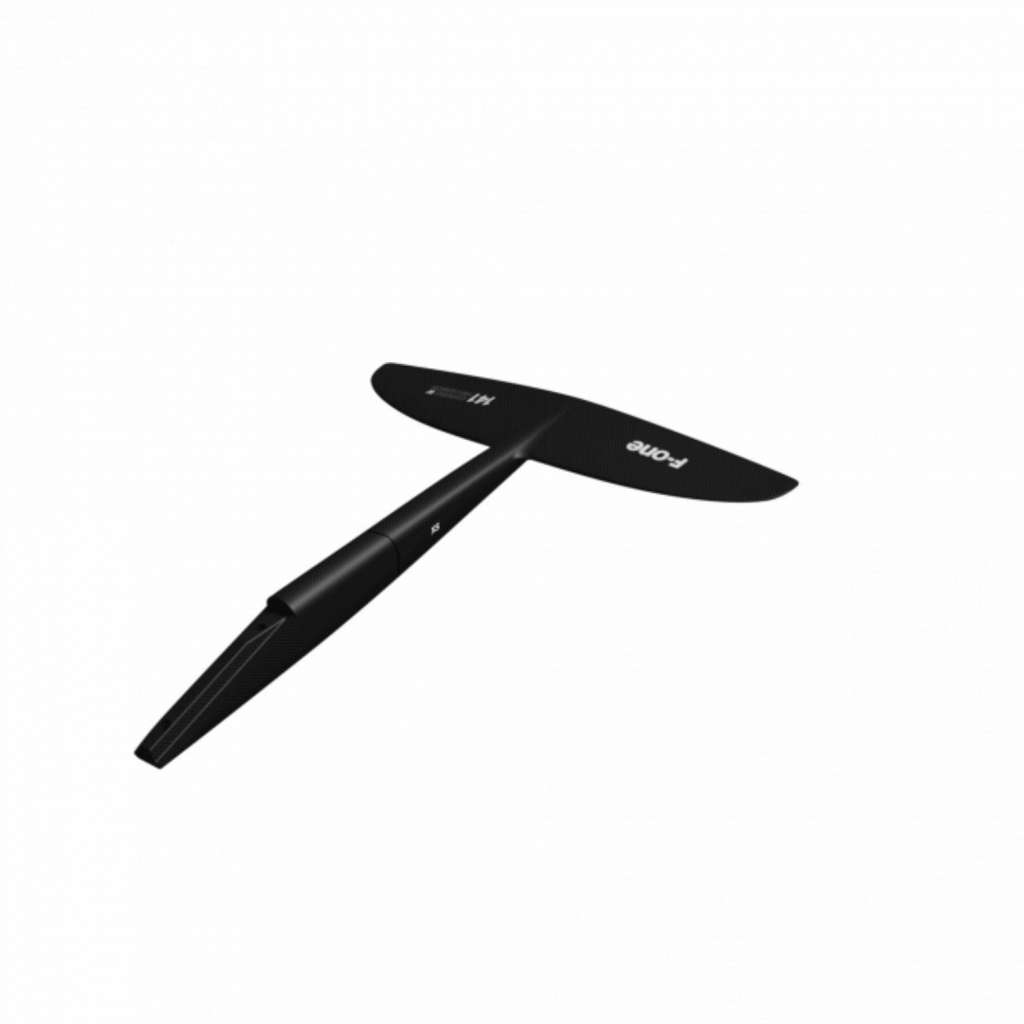
Hadou's tested setup: SK8 V2 750 + stab 141 W + HM mast 14 mm 80 cm = approximately 3 kg total. A coherent setup for a rider weighing 75 to 85 kg.
Field feedback: in wingfoil
In wing, the SK8 V2 750 proves surprisingly accessible. Hadou was able to start from 12 knots with a board offering good glide on take-off: proof that this foil is not reserved for strong wind days.
What strikes you first is the ease of use. The SK8 V2 almost pilots itself: you apply pressure, and it tracks. No surprises, no untimely stalls. It's easy to see why it has so many fans in the wing community.
What Hadou liked in wing
- Speed: with its 8.0 aspect ratio, it's faster than an AFS Silk, for example.
- Carving: turns are precise; the foil follows your input without flinching.
- Stability: a true "autopilot mode" in pitch, very reassuring.
- Ease of use: quickly accessible, even for a foil in this category.
Field feedback: in surffoil
It's truly in surffoil that the SK8 V2 reveals its true character. And there, Hadou doesn't hide his enthusiasm: he describes it as a foil that's "like butter."
The rail-to-rail is incredibly fluid. You transition from one edge to the other effortlessly, with that feeling of being exactly where you want to be on the wave. For a carving-oriented foil, this is exactly what you expect, and the SK8 V2 delivers.
In surf: what works, the point of attention
- Intuitive rail-to-rail: Hadou says you feel "really at home."
- Speed: the foil follows the swell even with a headwind.
- Responsiveness: it responds instantly, without latency.
- Point of attention: energy-intensive pumping to reconnect between two waves. This is a pure surf foil: take-off, ride, paddle back, or beach.
This last point is important: the SK8 is not made for pumping 500 meters between sets. You catch your wave, you ride it, and you return calmly. If you're looking to link bumps in downwind mode, this isn't the right tool.
Which stabilizer should you choose?
F-One offers two stabilizers in the Carving range, each with its own personality. The choice depends on your primary discipline.
Carving (without W): for surf foil
More powerful profile with good low-end range. Excellent for pumping to get back to the peak. This is the natural choice if you primarily do prone.
Carving W (141 W): for wingfoil
Optimized for high-speed stability. Better hold in deep carves. This is the one Hadou used for his wing sessions.
Our advice: if you alternate between wing and surf, the Carving W is a good compromise. You sacrifice a bit of pumping efficiency, but you gain versatility.
Hadou's Recommended Setup
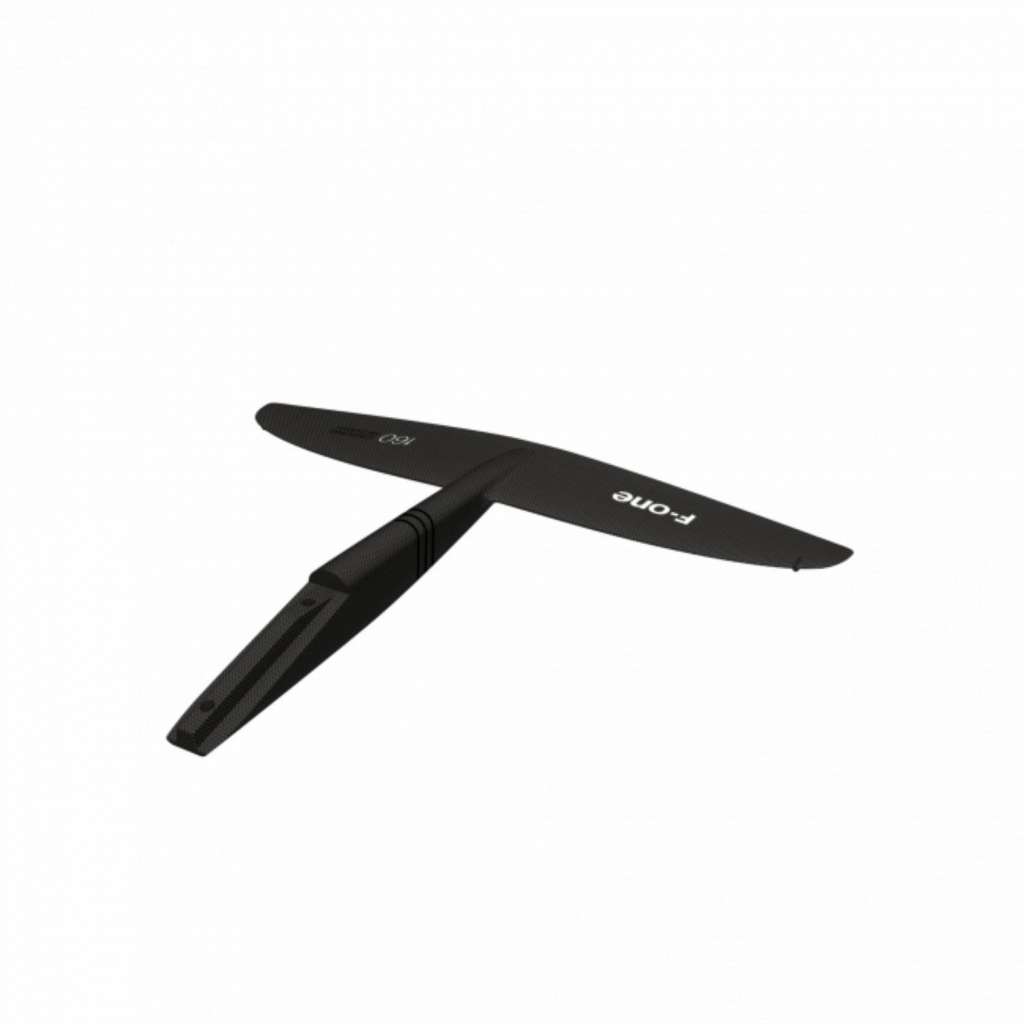
After his test sessions, Hadou identified a configuration he considers optimal for getting the most out of the SK8 V2:
Optimal Configuration
- Front Wing: SK8 V2 in 750 (for a 75 to 85 kg rider).
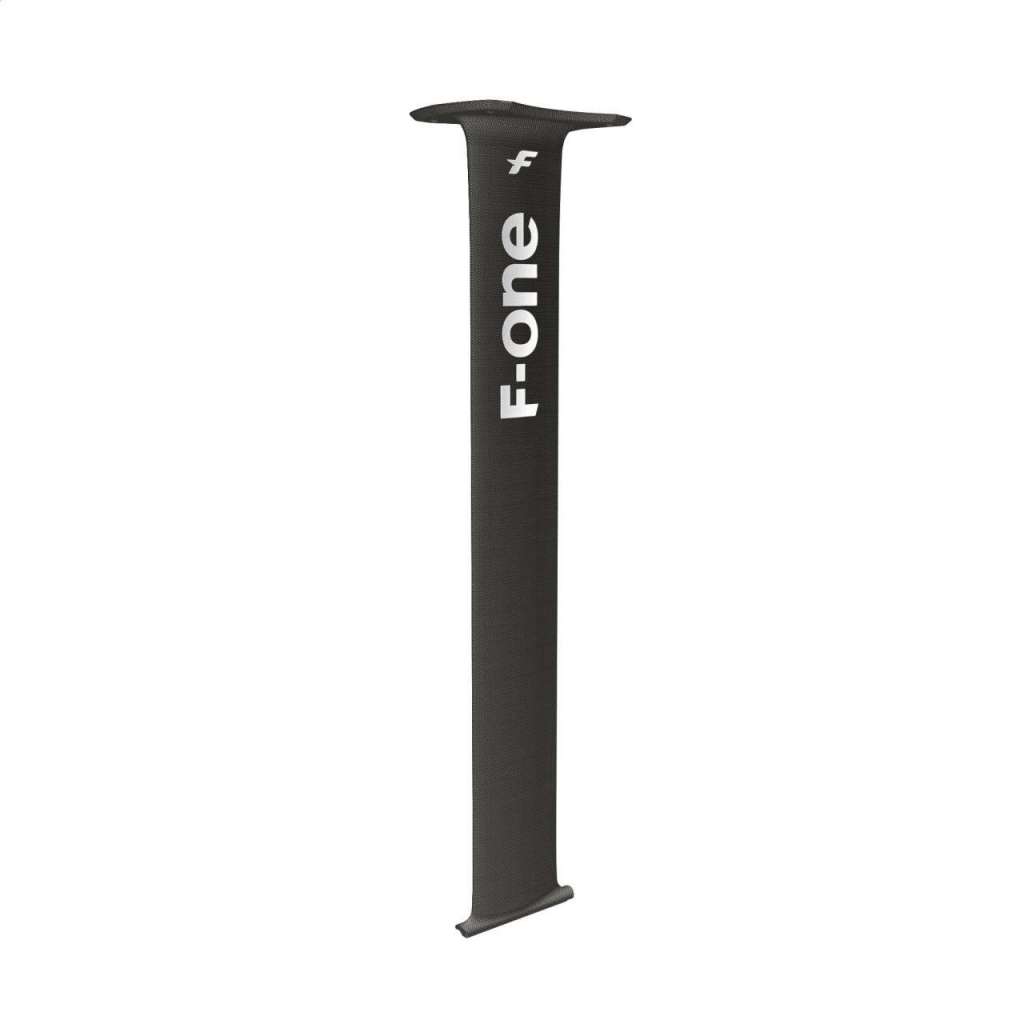
- Mast: HM 14 mm in 80 cm; carbon provides better glide than aluminum.
- Wingfoil Stabilizer: Carving W 141.
- Surf Foil Stabilizer: standard Carving range.
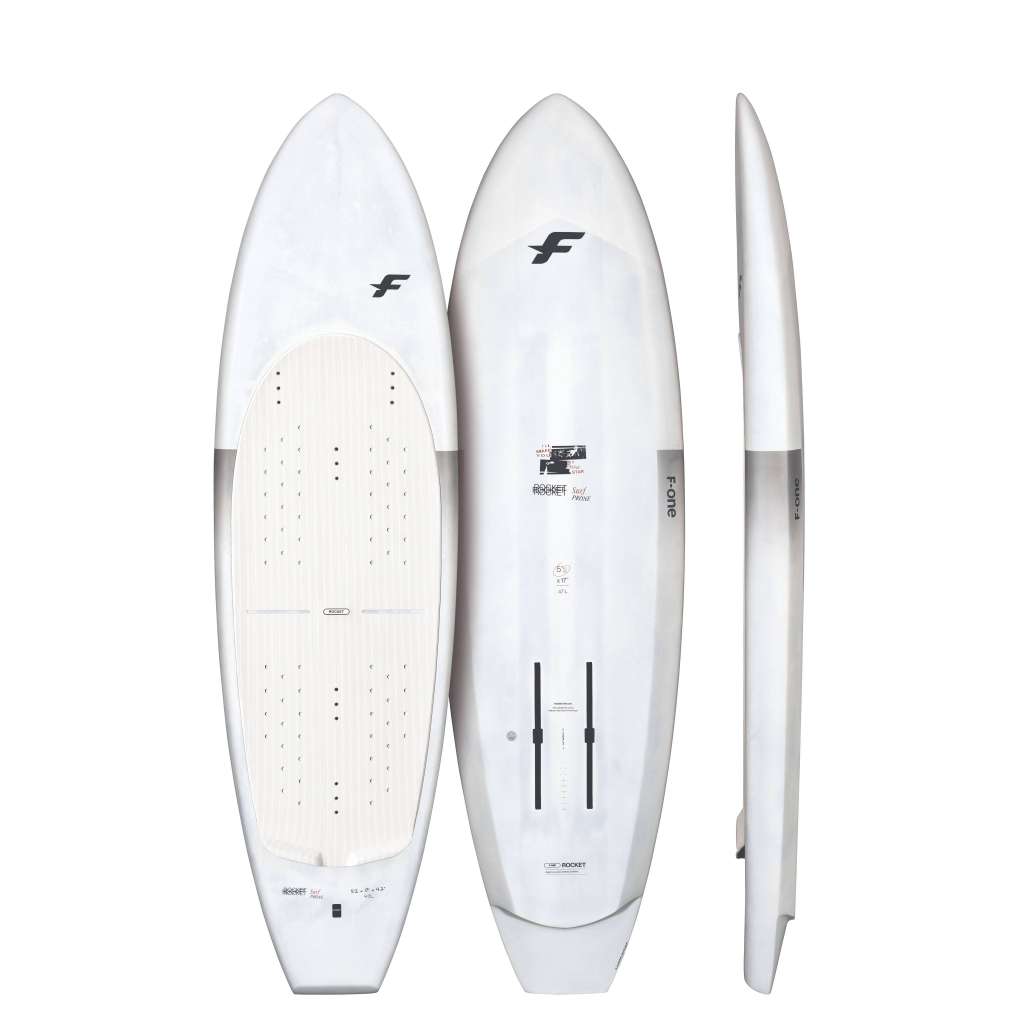
- Board: a board with good glide (e.g., Rocket Surf Prone).
An important point: the HM carbon mast truly makes a difference. The stiffness and vibration reduction significantly improve the foil's behavior, especially at high speeds.
Alternatives to the SK8 V2
The SK8 V2 isn't for everyone, and that's perfectly fine. Depending on your riding style, other foils in the F-One range might suit you better:
| Foil | Typical profile | Why choose it over the SK8? |
|---|---|---|
| Eagle X | Downwind, glide | Much better efficiency for long-distance pumping |
| Seven Seas | Allround versatile | More forgiving, better performance in light wind |
| Phantom | Progression, freeride | More stable, perfect for moving from intermediate to advanced |
| Gravity | Beginner wingfoil | Maximum lift, ultra-easy take-off |
The summary: choose the SK8 V2 if you want to surf your foil with precision. Opt for the Eagle X or the Seven Seas if you want to glide or do downwind.
Who is the SK8 V2 for?
Let's be direct: the SK8 V2 is not a foil for everyone. It has a strong personality and suits a certain rider profile.
You'll love it if…
- You want to surf above all else during your wing sessions.
- You're an advanced surffoil rider looking for a responsive foil.
- You want an allround wing/surf foil for moderate to strong conditions.
Look elsewhere if…
- You surffoil in micro-conditions (it's not great for long pumping).
- You want to do downwind: check out the Eagle X or the Seven Seas.
- You're a beginner: start with the Gravity or the Phantom.
Final verdict
So, what's our take on the F-One SK8 V2?
F-One didn't try to reinvent the wheel. The SK8 V1 was already a benchmark for carving, and the V2 builds on that solid foundation with a more refined construction. Stiffer, better for pumping, and more stable in pitch: the improvements are subtle but real.
This is clearly the foil to have if you want to surf your wing sessions or link waves in prone with precision. However, if you're looking for a downwind or light wind foil, this isn't the right choice. As Hadou summarizes: "subtle evolution, but we've capitalized on what worked. It remains a carving benchmark."
Frequently Asked Questions
What are the differences between SK8 V1 and V2?
Same shape, new stiffer carbon. Pumping goes from a "trampoline" feel to a direct "floor" feel. Better pitch stability too.
Which SK8 V2 size should I choose?
For winging, between 75 and 85 kg, the 750 cm² is a good compromise. Lighter riders: 650. Heavier riders or light conditions: 850 to 950.
Is the SK8 V2 suitable for downwind?
No, that's not its strong suit. The SK8 is optimized for carving. For downwind, look at the Eagle X or Seven Seas instead.
Is this foil suitable for beginners?
No, it requires a minimum intermediate level. If you're a beginner, opt for the F-One Gravity or Phantom.
Need personalized advice?
Our foil experts help you choose the right size and setup for your riding style, whether wing or surf.
See the SK8 V2 Make an appointment Contact us
Also read about F-One
Source: video test by Hadou Brunner (PimpYourRide). Indicative prices 2026, 15% sale subject to change. Selection and setup established with the GlissEvolution team.
 F-ONE
F-ONE