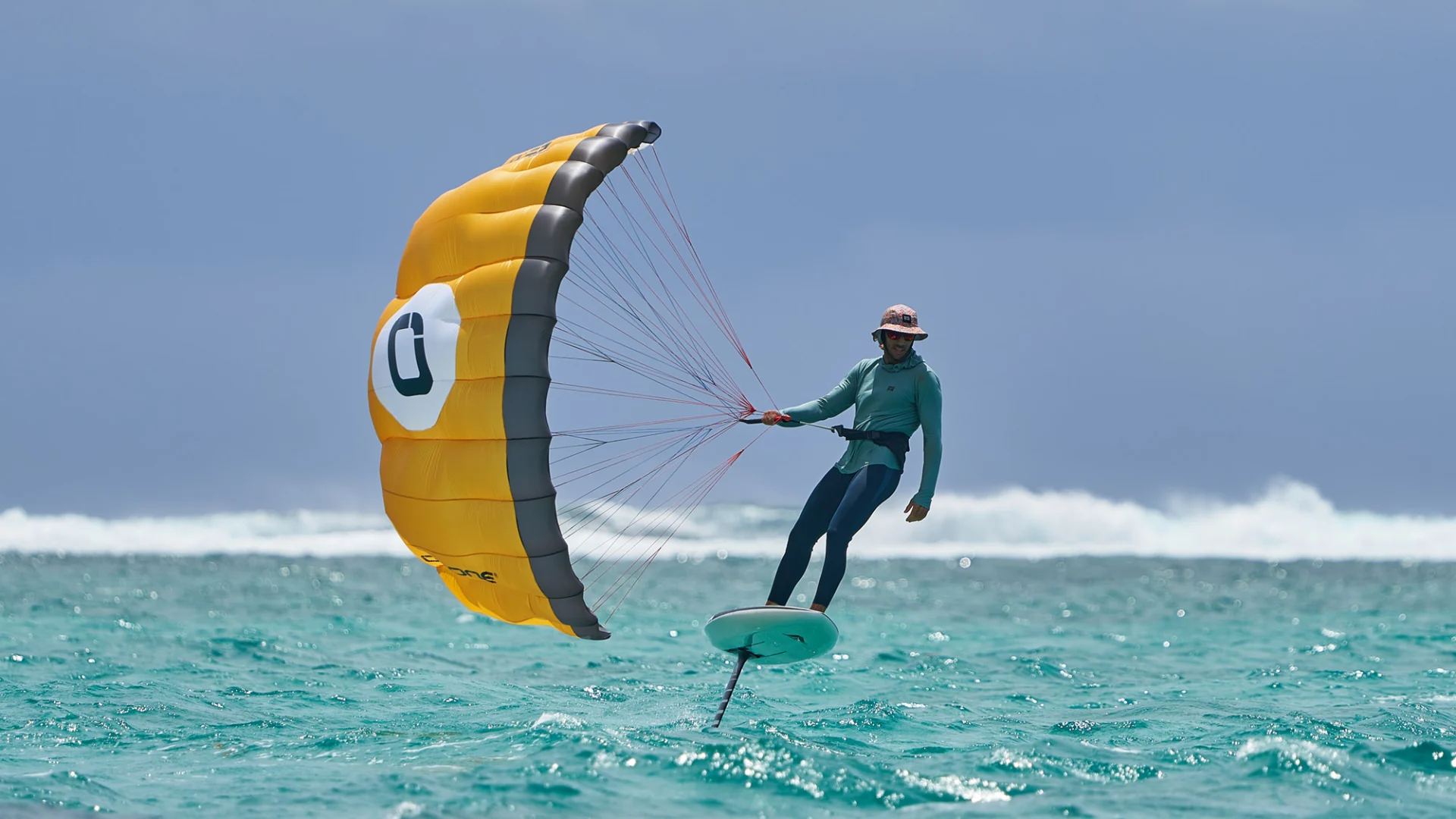
Ozone PowerPack 2026: Parawing Test and Review
After honing his skills on the K-Wing, Damien, GlissEvolution ambassador, made the leap to parawing with the Ozone PowerPack 2026. Here he shares his unfiltered field feedback: a stable and reassuring wing with direct pull, whose major asset is the ability to pack it in flight to surf in total freedom. Valuable insights for anyone wondering about this new way to ride.
Thanks to Damien, GlissEvolution ambassador, for this detailed field feedback.
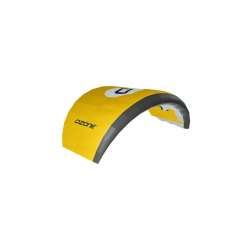
The Ozone PowerPack 2026 is a parawing (parafoil, without rigid structure) designed for freefly, bump surfing, and cruising in wing foil and kite foil.
Damien (76 kg) uses it in 4.3 m² (15-20 knots) and 3.0 m² (20-25 knots) with a Sevenseas 1100 foil. It offers more direct pull than a K-Wing of equivalent surface area, fast take-off, and flight stability that doesn't backstall. Available in 6 sizes from 1.9 to 5.0 m², starting from €889. For upwind performance and speed, the Pocket Rocket is still more suitable.
The PowerPack, for whom?
According to Damien's test, the PowerPack is primarily for riders who prioritize fun and freedom over speed records:
- You love freefly and bump surfing: this is its playground, with the ability to pack the wing to surf freely.
- You want to cruise the spot: tacking among wing and kite riders, relaxed.
- You're coming from K-Wing or winging: the transition happens in 2-3 sessions; the wing is stable and reassuring.
- You're looking for pure speed and upwind performance: opt instead for the Pocket Rocket, which is faster.
PowerPack 2026 Sizes and Prices
| Size | Use | Price |
|---|---|---|
| PP 1.9 m² | Strong wind, light rider | €889 |
| PP 2.4 m² | Consistent wind | €909 |
| PP 3.0 m² | Allround medium-strong wind | €929 |
| PP 3.6 m² | Allround | €949 |
| PP 4.3 m² | Medium wind, average rider | €989 |
| PP 5.0 m² | Light wind, heavy rider | €999 |
Our Test: Damien's Feedback
The K-Wing to Parawing Transition
After learning to fly with the K-Wing, the transition to the parawing was seamless. The sheeting technique is more sensitive on the bar, and flying requires more attention initially, with a risk of lines tangling in case of a fall: you need to stay focused for the first 2 or 3 sessions. Once past this stage, flying and transitions are similar, with heading and speed varying according to the parawing's aspect ratio.
Pull and Feel
In terms of pull, it's more direct and stronger than a K-Wing of equivalent surface area, without being at the level of a wing. This support from the wing helps with balance and makes pumping more efficient for getting out of the water, resulting in a faster take-off.
The Big Difference: Packing the Wing
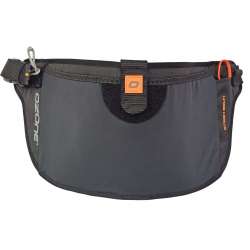
The major difference comes from the ability to pack the wing in flight, which allows you to surf with absolute freedom. This is the whole point of the parawing. The short, knot-free lines allow for effortless packing at will, and the storage bag can be worn as a backpack: you can even bring a second safety wing if the wind is uncertain, without being hindered on the water.
Stability, Upwind Performance, and Gust Management
The flight stability provides real comfort: the wing doesn't backstall if you oversheet a little on the bar and stays in the middle of the window without flinching. The short bar, with no line attachment in the middle, offers intuitive steering. The upwind performance is very good for moving around and catching new bumps, and the cruising speed is good without being supersonic, the moderate aspect ratio and slightly closed trailing edge provide control and comfort. In case of strong gusts, the wing remains manageable: the back lines maintain slight tension in depower mode, enough to stay in control and get back safely.
| Damien's Setup (76 kg) | Wind range |
|---|---|
| PowerPack 4.3 m² · F-One Midlength 6'2 95 L board · Sevenseas 1100 foil | 15-20 knots |
| PowerPack 3.0 m² · same board and foil | 20-25 knots |
In Summary: Our Opinion on the PowerPack
Avec la série PowerPack 2026, Ozone synthétise bien les besoins des riders qui aiment se déplacer sur le plan d'eau à la recherche de bumps ou de vagues à surfer, et qui apprécient de cruiser tranquillement sur le spot. Ce n'est pas l'aile du meilleur chrono, pour ça, la Pocket Rocket est plus indiquée, mais pour se faire plaisir en freefly et en surf, c'est un vrai bonheur, dans un format stable et rassurant qui pardonne.
Highlights
- Ability to pack the wing in flight for free surfing
- Direct pull, quick take-off
- Remarkable flight stability, no backstall
- Short and intuitive bar, short lines easy to pack
- Smart backpack (can carry a second safety wing)
- Manages well in gusts, effective depower
To Consider
- Higher skill level required than a K-Wing at first (2-3 sessions to adapt)
- Risk of lines tangling during the first few sessions
- Not the fastest: the Pocket Rocket points higher and goes faster
- Moderate cruising speed, a trade-off for comfort
FAQ: Ozone PowerPack 2026
What's the difference between a parawing and a K-Wing?
The parawing uses lines and a bar, like a small kite. The trim technique is more sensitive, but the major advantage is being able to pack the wing to Surf in total freedom. The pull is also more direct for an equivalent surface area.
Is the Ozone PowerPack suitable for parawing beginners?
Yes, provided you already have a foundation in K-Wing or classic wing. The transition requires 2 to 3 adaptation sessions. The PowerPack is stable, doesn't backstall, and remains manageable in gusts, making it a reassuring parawing for beginners.
What size PowerPack should I choose for 76 kg?
According to Damien (76 kg), the PP 4.3 covers the 15-20 knot range and the PP 3.0 covers the 20-25 knot range. These benchmarks can vary by +2 knots in the upper range with a smaller foil.
PowerPack or Pocket Rocket: Which to Choose?
If you're looking to go upwind and fast, the Pocket Rocket is more suitable. If you want to have fun freeflying, surfing bumps, and enjoying the pleasure of packing the wing, the PowerPack is the best choice. They are designed for two different uses.
Can you bring two wings to a session?
Yes, the PowerPack's storage bag can be worn as a backpack while riding. You can bring a second safety wing if the wind is uncertain, without being hindered on the water.
Is the PowerPack manageable in gusts?
Yes. In strong gusts, the wing remains manageable. The back lines remain slightly tensioned in depower mode, which allows you to maintain control and return to shore in complete safety.
We'll help you choose
No need to live in the area: call us or make an appointment (phone or video call) with a rider from the team. We'll advise you on choosing the right PowerPack size based on your build, your foil, and your wind conditions.
Make an appointment Call us Email us
Sources: field test conducted by Damien, GlissEvolution ambassador (Ozone PowerPack 2026, 4.3 and 3.0 m², Sevenseas 1100 foil). GlissEvolution summary, without distortion of the tester's comments.
 Ozone
Ozone