New Armstrong 2026 Mast Range: Test and Review
The mast has quietly become one of the most important parts of a foil setup: it influences pumping, glide, and turns. Rather than updating a single model, Armstrong has released three carbon masts: Carbon MK2, Performance MK2, and Performance-X. Hydro Gav tested them to find out if they are truly different on the water and which one to choose. We summarize his verdict, without distorting his words.
Thanks to Hydro Gav for this independent and detailed test, with no affiliation to Armstrong. His full video is embedded below: watch it in its entirety and subscribe to his channel to support his work.
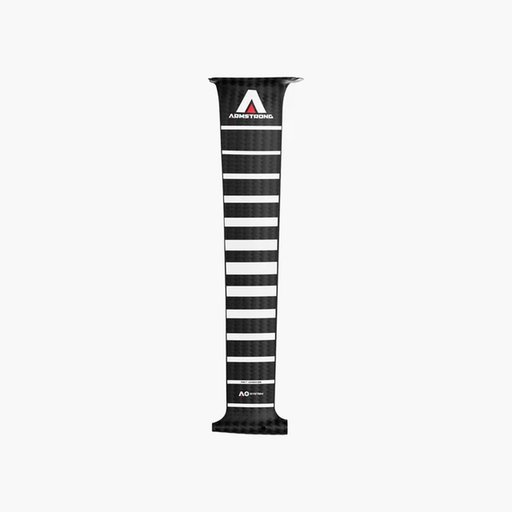
The new Armstrong 2026 mast range features three carbon masts (Carbon MK2, Performance MK2, and Performance-X) from €919 to €2.549 (incl. VAT), sharing the same specifications: stiffness, efficiency, and reduced drag.
Tested by Hydro Gav (independent test): impeccable manufacturing, exemplary finish (M6 titanium screw set, bags considered the best on the market). His favorite is the Performance MK2, the most allround and best value for money; the Performance-X remains the benchmark for efficiency for downwind and parawing. Not a single "best mast" but three coherent choices depending on use and budget.
The Armstrong Mast Range at a Glance
Three models, three budgets, three uses, with the same manufacturing standards. Here are the lengths and actual prices observed in stores.
| Model | Construction | Lengths | Price (incl. VAT) |
|---|---|---|---|
| Carbon MK2 | High modulus carbon, thicker (approx. 16 mm) | 65.5 to 86.5 cm | 919 to 1.€069 |
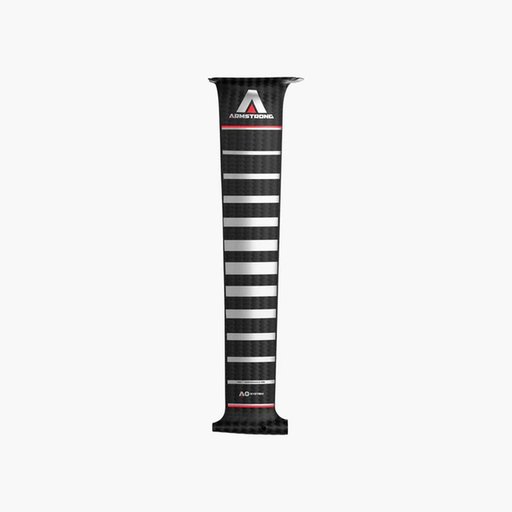
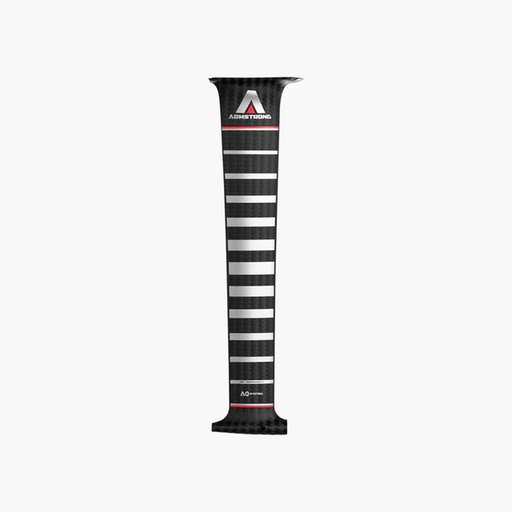
| Performance MK2 (His Favorite) | Carbon, 13.8 mm profile, stiffer | 72.5 to 93.5 cm | 1.689 to 1.€839 |
| Performance-X | High-performance thin carbon (approx. 11.8 mm) | 72.5 to 93.5 cm | 2.399 to 2.€549 |
Not sure about the model or length? Contact us to match it to your use, foil, and size.
Who is this range for?
The strength of this range is that it covers three budgets and three uses with the same manufacturing care. Riders transitioning from aluminum to carbon will find the Carbon MK2 year accessible entry point without major compromises; those seeking a single allround mast for everything (wing, parawing, downwind) will aim for the Performance MK2; and efficiency hunters in downwind or parawing, ready to invest, will go for the Performance-X.
Conversely, the Performance-X isn't for everyone: the rest of the range is sufficient for many riders, and it shows its limits with very large foils depending on weight. To explore the ecosystem, also see our selection of foil masts and wingfoil foils.
Our Detailed Test of the Armstrong Range
The field feedback is from Hydro Gav, who conducted an independent test, with no affiliation to Armstrong. What interests him: knowing if these three masts are truly different once on the water, and which one is worth your money.
Independent Test: Hydro Gav
A Complete Range, Not Just One Mast
Rather than an isolated new high-end mast, Armstrong has built an entire range: a revised standard carbon, the Performance MK2 in the middle, and the Performance-X as the flagship. Each at a different price, with a slightly different construction and a different performance target, but with the same specifications: stiffness, efficiency, and reduced drag. In terms of presentation, the mast comes with its fuselage fittings, M6 titanium screw set (only one tool to assemble everything), spare parts, and a dedicated case. The bags are, according to him, the best on the market.
Manufacturing and assembly
The carbon work is impeccable, including around the base, with no discontinuity in the weave: it looks like a single block of carbon. This attention to detail is found throughout the range, even on more affordable options. He emphasizes the cutouts, which few brands offer: he has never seen them fail, especially with recent layups, and above all, they greatly simplify assembly: you place, you slide, you screw, it's done.
The Performance-X, the Flagship
Very thin, around 11.8 mm, it immediately enters the high-performance category, but a very thin mast is useless if it becomes twitchy or lacks stiffness, and that's not the case here: it feels totally locked in, on the wave as well as downwind, predictable and controlled. When pumping, energy transfer is instantaneous, with no lag. Its real benefit is not pure speed but expanding what your foils are capable of: on a mid-aspect like an MA V2 downwind, it glides and follows the swell while turning like in prone. Its limits: a premium price, and a maximum front foil size that depends on the rider's weight (around a UHA 1270 at 80 kg).
The Performance MK2, His Favorite
It's his favorite of the three, not because it's the fastest, but because it strikes the right balance and is the most allround. For him, it's the best value for money in the range. In terms of feel, it remains very efficient, with no clear stall compared to the Performance-X, but you gain stiffness and support, especially with large, high aspect ratio foils or for turning control. It handles the biggest setups without hesitation, remains stable and predictable, to the point of making you question the Performance-X. As for flaws, nothing jumped out at him: he looked but found none.
The Carbon MK2: Your Entry into Carbon
This is the most affordable option in the carbon range, yet it feels anything but cheap. Compared to the previous model, our tester described it as "night and day." Armstrong opted for a high modulus layup, compensated by a thickness of around 16 mm. The stiffness remains solid, the mast feels planted and predictable, and it handles the Armstrong foil range well. While less efficient than the other two, it's an excellent starting point for pure ease of use, especially for those transitioning from aluminum to carbon.
Which Armstrong mast should you choose?
| Model | Who it's for / What it's used for |
|---|---|
| Performance-X | Downwind and parawing, for those seeking efficiency, glide, and minimal effort, who accept the premium price, while considering its limits with very large foils. |
| Performance MK2 | The choice for most riders, especially if you only have one mast: the most allround, it handles large foils, and is both efficient and forgiving. Ideal for riders over 80 kg or for a wide range of conditions. |
| Carbon MK2 | The entry into the Armstrong system without major compromises: perfect for transitioning from aluminum to carbon. You sacrifice a little efficiency at the top end, which intermediate riders won't notice. |
EN BREF: Our Review of the Armstrong Range
For Hydro Gav, the strength of this new range is precisely that there isn't one single best mast, but three coherent choices depending on use and budget. The Performance-X is a benchmark for efficiency that truly unlocks the potential of foils, especially in downwind and parawing, but remains expensive and limited with very large foils. The Performance MK2, his favorite, combines performance, versatility, and price, and will suit the majority. The Carbon MK2 offers a true carbon entry point, a significant improvement over the old model. Three masts that make sense, with exemplary manufacturing.
FAQ: Armstrong 2026 Masts
What does the new Armstrong mast range offer?
Armstrong offers three carbon masts: the Carbon MK2 (entry-level carbon), the Performance MK2 (most allround), and the Performance-X (ultra-thin and efficient flagship). All share the same core specifications: stiffness, efficiency, and reduced drag.
Which Armstrong mast should you choose?
According to Hydro Gav, the Performance MK2 suits most riders (it's the most allround, ideal for riders over 80 kg or with large foils). The Performance-X is designed for downwind and parawing for those seeking maximum efficiency. The Carbon MK2 is the ideal entry into the Armstrong system.
Is the Performance-X worth the price?
It is very thin (approx. 11.8 mm), efficient, yet stable, and it unlocks the potential of foils, especially for downwind. However, it is a premium product and has limitations with very large foils depending on rider weight. For our tester, many riders will find the Performance MK2 perfectly suited to their needs.
What mast lengths are available?
The Carbon MK2 ranges from 65.5 to 86.5 cm, while the Performance MK2 and Performance-X range from 72.5 to 93.5 cm. Our tester finds the 79.5 cm to be the allround format, and the 86.5 cm is ideal for upwind riding.
What is included with the Armstrong mast?
Fuselage fittings, an M6 titanium screw set that allows everything to be assembled with a single tool, spare parts, a high-quality bag, and a dedicated case. The assembly notches simplify foil mounting.
What is the price of Armstrong 2026 masts?
The Carbon MK2 starts at €919 incl. tax, the Performance MK2 at 1.€689 incl. tax, and the Performance-X at 2.€399 incl. tax. Prices vary by length (up to 2.€549 for the Performance-X 93.5 cm).
We'll help you choose
Our team knows the Armstrong ecosystem well and rides all year round. We'll advise you on the model, length, and foil compatibility, remotely or at the Pornichet store, to find the mast that's right for you.
Make an appointment Call us See masts
Source: independent review of the new Armstrong mast range by Hydro Gav (YouTube video "Armstrong New Mast Range review"). This article is a summary in French, published with our thanks; the opinions expressed are his own, transcribed without distortion.