Tests & Reviews · Wingfoil
Armstrong X-Wing Performance 2026: Hadou Brunner's review and test
Published September 11, 2026
Armstrong built its reputation on foils long before wings. The X-Wing Performance is the brand's bold entry into the high-end wing market. Hadou Brunner recently spent twelve minutes thoroughly reviewing the 4 m² model. We'll share his insights and add our own expert opinions from the shop.
Huge thanks to Hadou Brunner for this on-water test, which he published for free access. His video is embedded further down in this article: make sure to watch it in full and subscribe to his channel. Your support helps make this kind of valuable content possible.
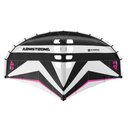
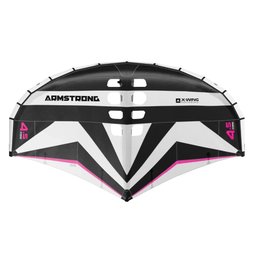
The X-Wing Performance is Armstrong's premium wing for advanced riders. It's available in nine sizes, from 2.5 to 6.5 m², with prices ranging from €1,429 to €1,829 in our catalog as of September 11, 2026. This wing stands out with its woven composite structure, an asymmetrical carbon boom sold separately, and a dedicated freefly handle. The information you're reading here is based on Hadou Brunner's field test, published on September 10, 2026.
Key Features
- This wing is designed for advanced and demanding riders. Armstrong continues to offer the A-Wing XPS MK 2 for beginner and intermediate profiles.
- The Leading Edge and strut structure are crafted from UPE-type woven composite, while the canopy features Teijin D3 Techno Force triple ripstop.
- The carbon boom is not included in the box. Expect an additional €126, and you'll need one boom for each size range you plan to ride.
- Hadou Brunner found very little to criticize. He highlighted its impressive aerodynamics, neutral feel in freefly, and what he described as exemplary stiffness.
- Nine sizes are available, from 2.5 to 6.5 m² in half-square-meter increments, priced from €1,429 to €1,829 in our shop as of September 11, 2026.
Who tested it, and what that means
Let's be clear from the outset: we haven't personally tested this wing. This review is based on Hadou Brunner's test. He publishes wing and foil gear reviews on his channel and forum. He received the 4 m² model, rode it freeride on flat water, in waves, in light wind, and in strong wind, then published his debrief on September 10, 2026.
What we're providing is everything else: the actual sizes and prices from our catalog, what we know about the boom and its compatibility, and the advice we'd give to someone considering this wing in our shop. The on-water judgment is entirely his, not ours.
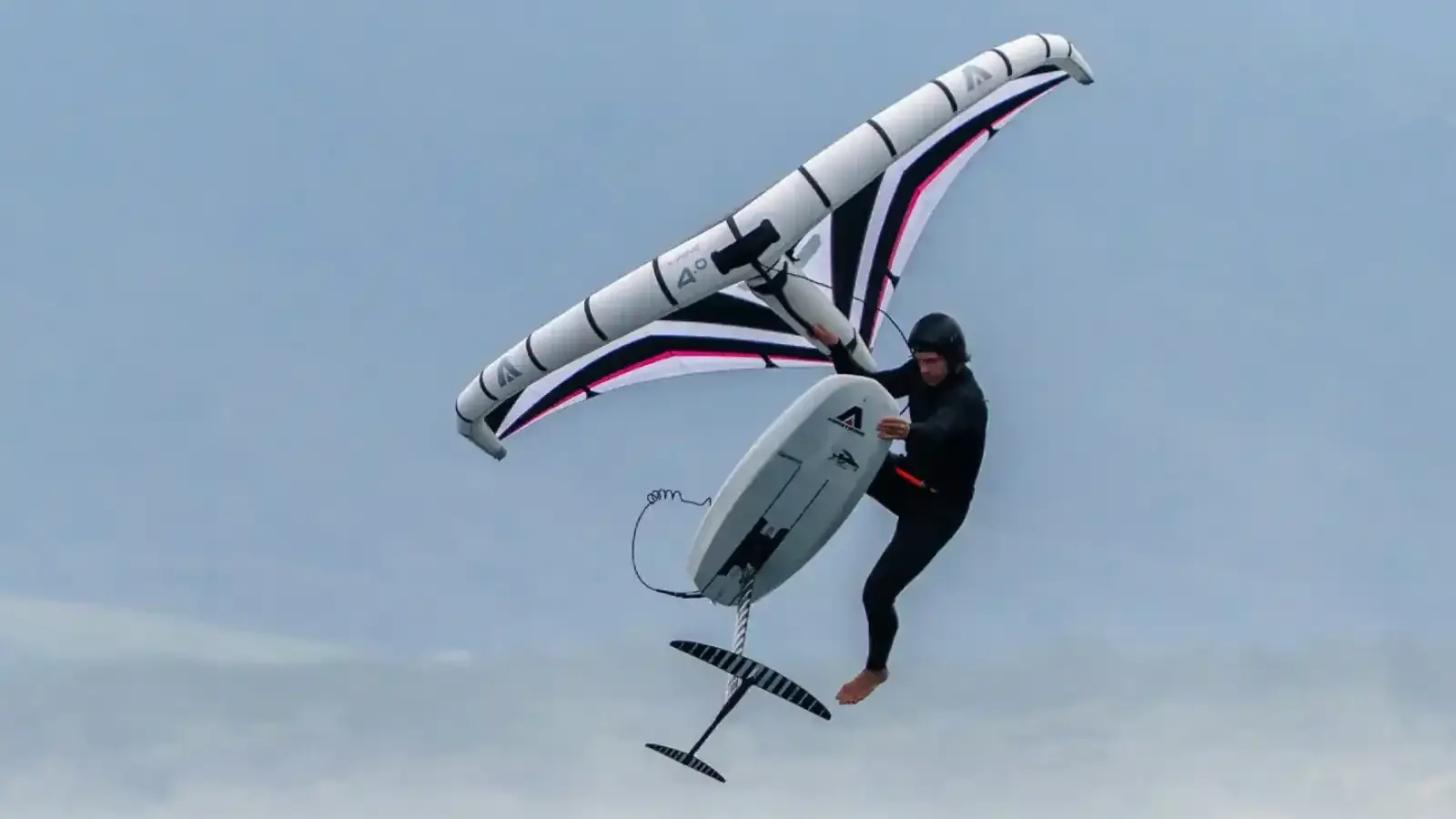
Hadou Brunner tests the Armstrong X-Wing Performance in 4 m².
The X-Wing Performance: who is it for?
Armstrong clearly distinguishes between its two wings. The X-Wing Performance is aimed at the advanced rider who demands peak performance from their gear. The A-Wing XPS MK 2It remains the choice for beginners and intermediates. It has a more accessible price point and slightly less performance.
The Performance is for aggressive freeride and speed. It also excels at freefly and wave riding. Hadou Brunner summarizes it by saying there's something for everyone, provided you already have the necessary skill level. In terms of shape, the aspect ratio is higher than the XPS MK 2, and the Leading Edge has been reduced. These two design choices enhance aerial finesse, improving upwind performance, and make the wing feel lighter when released for freefly.
Sizes and prices
| Size | Price incl. tax | Boom required |
|---|---|---|
| 2.5 m² | €1,429 | Small |
| 3 m² | €1,479 | Small |
| 3.5 m² | €1,529 | Small |
| 4 m², the tested size | €1,579 | Medium |
| 4.5 m² | €1,629 | Medium |
| 5 m² | €1,679 | Large |
| 5.5 m² | €1,729 | Large |
| 6 m² | €1,779 | Large |
| 6.5 m² | €1,829 | Large |
Prices were noted in our catalog on September 11, 2026, and do not include the boom. For the 4 m² model tested, Hadou Brunner reported a weight of 1.8 kg bare and 2.25 kg with the boom mounted. It features a wingspan of 2.93 m and a stated wind range of 18 to 34 knots for an average rider build of approximately 75 kg.
Armstrong X-Wing Performance 2026 product sheet
Woven rather than Aluula
This technical choice defines the wing's construction. The Leading Edge and strut are made from a woven composite Armstrong calls Ultra PE X-Ply Advanced Laminate Composite. This material features four layers, including a visible structural weave in small grids, protected by a 0.25 mm film and an outer fabric designed to withstand abrasion and UV. The canopy is crafted from Teijin D3 Techno Force triple ripstop.
Armstrong has opted not to use Aluula, and Hadou Brunner believes this gamble pays off. He praises its exemplary stiffness and compares it to other woven wings he's tested. He also raises the question of whether the added cost of Aluula truly translates to a significant on-water gain, especially when some wings exceed €2.000. He notes that his own weight is 62 kg, suggesting a 90 kg rider might experience it differently.
The boom: the real budget consideration
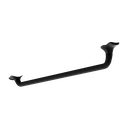
The wing comes with a compact dacron bag, a patch kit, a straight wrist leash with a swivel, a set of carbon battens, and a spare batten. The boom is not included. You'll need to purchase the Armstrong carbon boom separately, priced at €126 in our catalog as of September 11, 2026, which includes its own bag.
Three sizes cover the range: small for 2.5 to 3.5 m², medium for 4 and 4.5 m², and large for 5 to 6.5 m². If your quiver spans two size ranges, you'll need two booms. Factor this into your calculations before comparing prices with brands that include their boom as standard.
Hadou Brunner explains the logic behind this: Armstrong developed this boom for both of its wings. The XPS MK 2 offers the choice between the boom and two rigid handles when ordering. When viewed this way, the boom becomes an accessory you buy once and keep, rather than a hidden extra cost.
The boom can be disassembled by hand, without tools. It weighs 400 g and features an asymmetrical cross-section.
Hadou Brunner's on-water impressions
Aerodynamics is his starting point. He mentions it three times in the video, which clearly shows what he prioritizes.
In freefly, the wing becomes an extension of you. The handle is comfortable, and he ranks it among the best in this category. That's crucial when you're surfing a wave and want to focus on your stance, not what you're holding.
Maneuvering is a breeze. You'll nail your jibe even in light wind, thanks to the boom that lets you lift the wing when needed. During a transfer, it pivots effortlessly on its own, requiring no pressure on your front hand or grip adjustment. This wing won't wear you out.
Its wind range is impressive at both ends. On the high end, he rode the 4 m² in over 20 to 25 knots: it pulls, but the wing stays stable, doesn't flap, and never feels saturated. On the low end, he didn't have the 3 m² he usually prefers for comparison, but he handled the 4 m² in strong wind without any issues.
The asymmetrical boom elicits a rare comment: with the front hand further from the Leading Edge, the wing is already pre-sheeted for the same arm position. This means less effort to sheet in. He highlights this for riders dealing with elbow or shoulder tendonitis.
What he criticizes
Not much, and he says it plainly: he looked, but found no major flaws. There are two minor points. The wing is very white, so it might show marks over time. Also, the small bag provided duplicates the boom bag, though he uses it to store his gear in his van while changing into his wetsuit.
The separately sold boom initially bothered him until he understood the product line's logic. This is the only point that truly requires consideration when buying.
What we say at the counter
A single test, performed by one light rider on one size, doesn't represent universal truth. It's a documented opinion, and it aligns with what we've seen from the rest of the Armstrong range, as we've sold their foils and boards for several seasons.
We'd recommend it to an advanced wingfoiler who wants a wing with a wide wind range that disappears when they let go, without the price tag of an Aluula wing. We wouldn't recommend it to beginners; they'd be better off with the XPS MK 2 and saving the difference for their foil.
Before you complete your purchase, double-check the boom. An X-Wing Performance at €1,579 for the 4 m² becomes €1,705 with its boom. The smart move is to think about your complete quiver, not just the wing's price.
Consider this
- This isn't our test. Hadou Brunner conducted it on a single size, the 4 m², with a rider weighing 62 kg. A heavier rider will experience a different feel, both in terms of stiffness and low end.
- The boom isn't included, and you need one per size range. If your quiver spans two ranges, you'll need two booms.
- The comparison with Aluula is based on feel, not precise measurements. As of this writing, no one has published quantified data on this.
- If you're used to a wing with handles, switching to a boom changes your grip and movements. It's best to test it before ordering.
Frequently Asked Questions
Does the Armstrong X-Wing Performance come with its boom?
No. The wing comes with its bag, a repair kit, a swivel wrist leash, and a set of carbon battens with a spare batten. The carbon boom is ordered separately, at €126 on our catalog as of September 11, 2026. Armstrong uses the same boom on the X-Wing Performance and the A-Wing XPS MK 2. One boom can serve two wings of the same size range.
What is the difference between the X-Wing Performance and the A-Wing XPS MK 2?
The intended use. Hadou Brunner positions the X-Wing Performance for advanced and demanding riders. The A-Wing XPS MK 2 is for beginners and intermediates. It is less expensive and less performance-driven. The X-Wing Performance has a higher aspect ratio and a reduced Leading Edge. This makes it go upwind better and disappear more in freefly.
How many boom sizes are needed for an Armstrong quiver?
Three booms cover the range. The small goes from 2.5 to 3.5 m², the medium covers 4 and 4.5 m², and the large covers 5 to 6.5 m². A quiver that spans two ranges therefore requires two booms. Factor this into your budget before comparing prices with a brand that includes its boom.
How does the woven construction compare to Aluula?
Hadou Brunner considers the stiffness exemplary. He says he does not need more. He specifies that he weighs 62 kg, and a 90 kg rider might feel things differently. His argument is economic as much as technical: woven material approaches the behavior of Aluula at a more contained price. Some Aluula wings exceed €2,000.
What size X-Wing Performance should you choose?
Nine sizes are available, from 2.5 to 6.5 m² in half-square-meter increments. Hadou Brunner tested the 4 m², which he rates for 18 to 34 knots for an average rider of about 75 kg. This wing has a wingspan of 2.93 m. Your choice depends on your body size, the body of water, and the foil you mount. Call us at 09 62 64 74 77; we will guide you.
Hesitating on size or boom?
We don't just sell Armstrong gear at the shop; we assemble it, ride it, and love it. Drop by, give us a call, or schedule an appointment, and we'll help you fine-tune your quiver.

GlissEvolution, your watersports shop in Pornichet since 2005. We sell, assemble, and ride the gear we present.
Also worth a read
Sources: video test of the Armstrong X-Wing Performance 4 m² published by Hadou Brunner on September 10, 2026, duration 12 min 13. Sizes, references, and VAT-inclusive prices taken from the GlissEvolution catalog on September 11, 2026. Weight, wingspan, wind range, materials, and boom price announced in this video.