Choisir le meilleur Foil de Wingfoil : Le guide
Un foil de wingfoil est l'ensemble boîtier + mât + fuselage + aile avant + stabilisateur qui soulève la planche au-dessus de l'eau.
En résumé
- C'est lui qui détermine la facilité de décollage, la stabilité en vol, la vitesse et la maniabilité, bien plus que la planche elle-même.
- Un pack complet avec mât carbone de 85 cm et aile de 1500 cm² est le meilleur compromis pour progresser.
- Comment choisir son foil de wingfoil : le guide complet Le wingfoil gagne rapidement en popularité et choisir le bon équipement est essentiel pour une expérience réussie.
- Le foil est la pièce maitresse de votre setup : c'est lui qui détermine la facilité de décollage, la stabilité en vol, la vitesse et la maniabilité.
Un foil de wingfoil est l'ensemble boîtier + mât + fuselage + aile avant + stabilisateur qui soulève la planche au-dessus de l'eau. C'est lui qui détermine la facilité de décollage, la stabilité en vol, la vitesse et la maniabilité, bien plus que la planche elle-même.
📌 Quick Answer
To choose your wingfoil foil, focus on 4 criteria: the mast (aluminum for beginners, carbon for performance, 70-90 cm depending on skill level), the front wing (1700+ cm² for beginners, less than 1100 cm² for experts), the fuselage (long = stable, short = agile), and the stabilizer (large = forgiving, small = responsive). A complete set with an 85 cm carbon mast and a 1500 cm² wing is the best compromise for progression.
How to Choose Your Wingfoil Foil: The Complete Guide
Wingfoiling is rapidly gaining popularity, and choosing the right equipment is essential for a successful experience. The foil is the centerpiece of your setup: it determines ease of take-off, stability in flight, speed, and handling. In this guide, we detail each foil component and how to select it based on your skill level and use.
Summary
1. Components of a Wingfoil Foil
Before you dive into buying, it's important to understand the structure of a foil. Each component plays a precise role in how your setup performs.
The 5 Components of the Foil
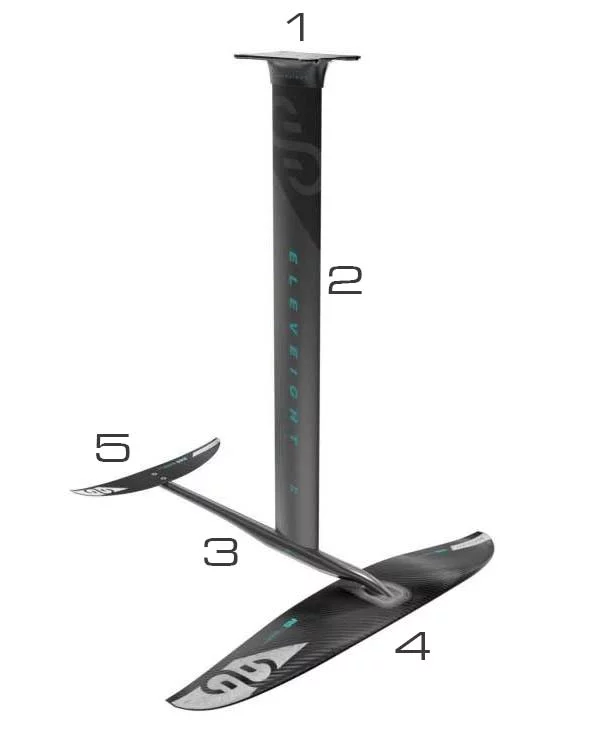
1. The box: the part that connects the board to the mast. The most common standards are Deep Tuttle and Plate (screws). The choice of box determines board/foil compatibility.
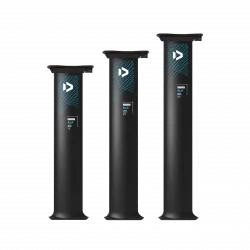
2. The mast: it defines the flight height above the water. Its material (aluminum or carbon) directly influences stiffness, weight, and performance.
3. The fuselage: the foil's "back stiffener" that connects the mast to the Front Wing and rear wings. Its length impacts stability and handling.
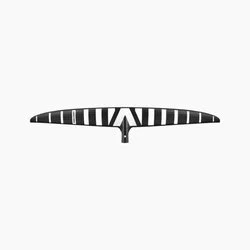
4. The front wing: the most important component. Its surface area, profile, and aspect ratio determine lift, take-off speed, and handling.
5. The rear wing (stabilizer): smaller than the front wing, it ensures pitch stabilization and influences the foil's responsiveness.
2. Foil Mast: Aluminum or Carbon?
The choice of mast material greatly influences your foil's performance. This is often the first question riders ask themselves.
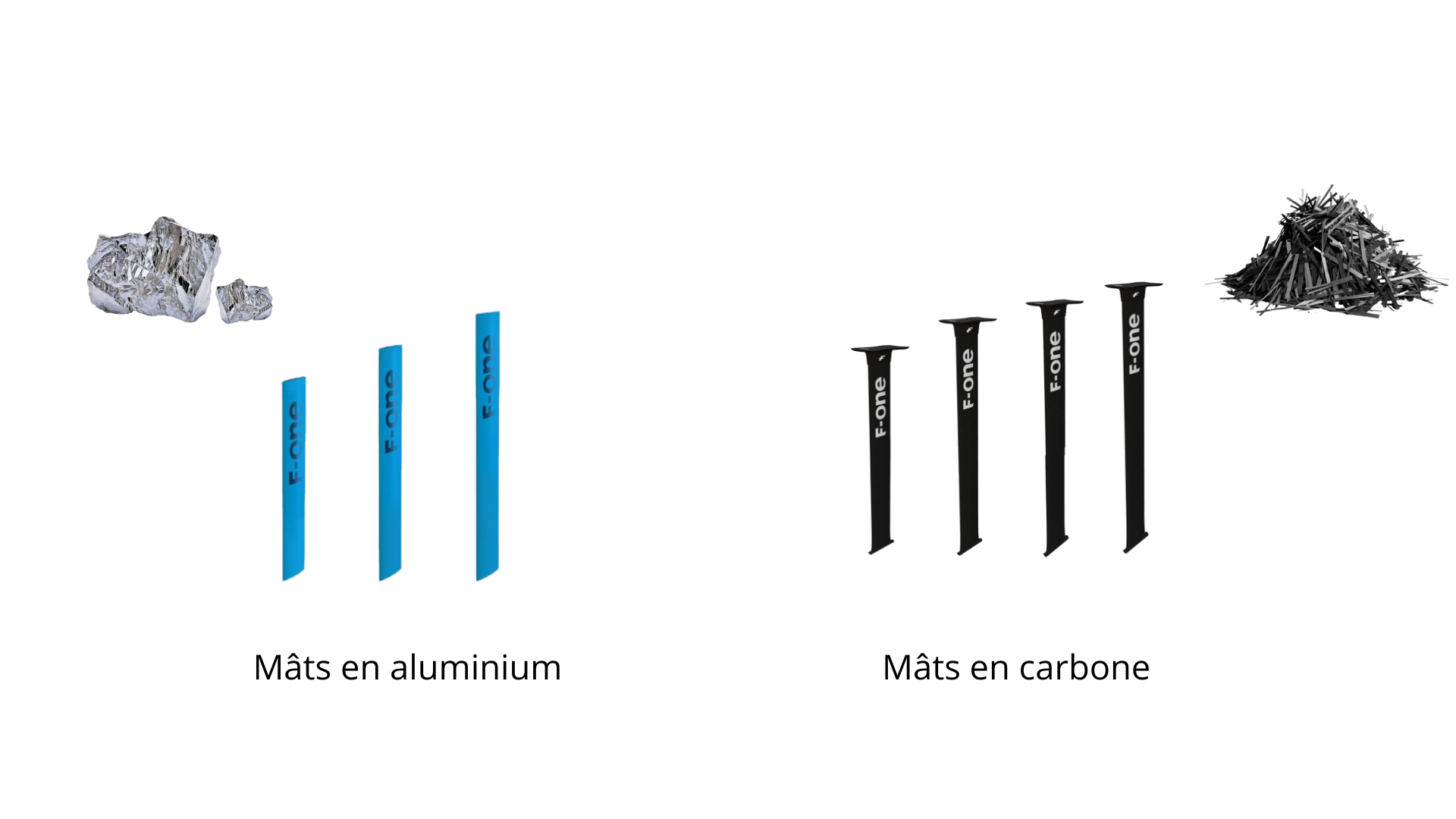
Aluminum Mast
An aluminum mast is the logical choice for beginners. It's affordable and handles impacts well. However, it's heavier, less stiff, and creates more drag in the water. For an experienced rider, it will lack responsiveness and speed.
Who it's for: beginners, those on a budget, recreational use.
Carbon Mast
A carbon mast is the standard for intermediate and advanced riders. It is lighter, stiffer, and faster. Its thinner profile reduces drag in the water, offering better sensations and more efficient pumping. The investment is greater but quickly pays off.
Who it's for: intermediate to expert riders, those seeking performance.
3. Mast Size: Which Height to Choose?
Mast height is often underestimated, but it plays a crucial role in the performance and comfort of your session. The longer the mast, the higher you fly above the water, with its advantages and constraints.
Short Masts: 70-80 cm
Perfect for beginners, shallow waters, and areas with underwater obstacles. They offer a sense of safety and are more forgiving of foot placement errors. The reduced flight height limits violent falls. It's the ideal choice for learning to foil with confidence.
Intermediate Masts: 80-90 cm
The best compromise for intermediate riders. They offer a good balance between stability and performance, allowing for tighter turns and better responsiveness. The 85 cm mast is currently the most popular standard in wingfoil, suitable for the vast majority of conditions and skill levels.
Long Masts: 90 cm and above
Recommended for advanced riders and open ocean surfing. They allow you to ride above the waves without the foil coming out of the water, better pumping thanks to the range of motion, and more margin for committed maneuvers. However, they require good technical mastery.

4. Front Wing: Which Surface Area to Choose?
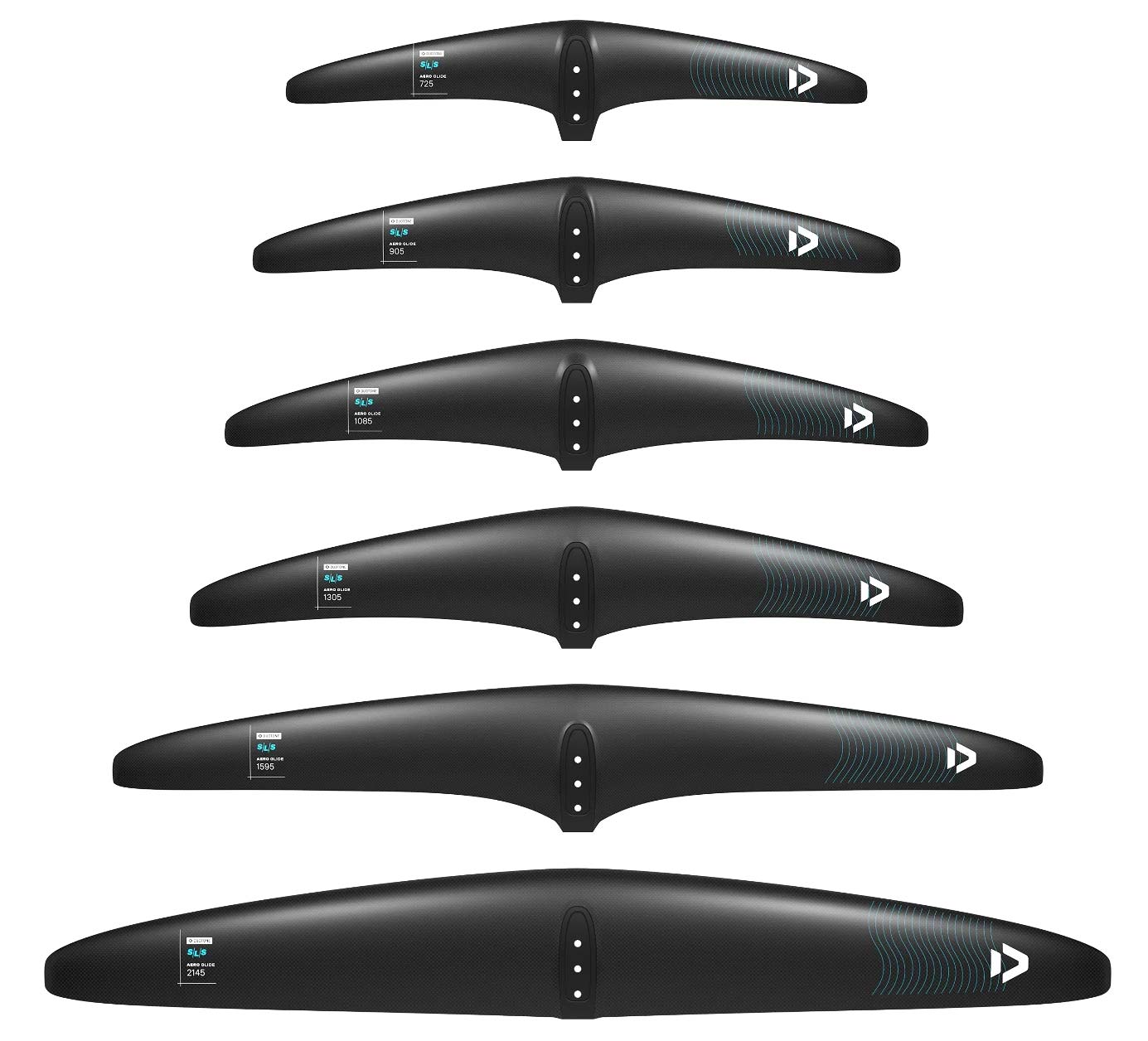
The front wing is the most crucial component of your foil. Its surface area directly influences take-off speed, flight stability, maximum speed, and handling. The choice must be adapted to your size, skill level, and riding conditions.
Large Wings: 1700 cm² and above
Ideal for beginners, heavier riders, or for riding in light wind. They offer high lift, allowing for early take-off and stable riding at low speeds. The compromise: a more limited maximum speed and less handling in tight turns.
Intermediate Wings: 1100-1700 cm²
The most versatile range, suitable for intermediate riders. They offer a good balance between lift, handling, and speed. This is the optimal choice for progressing and starting to have fun in waves or sustained freeride. Around 1500 cm², you'll find an excellent compromise.
Narrow Front Wings: less than 1100 cm²
Preferred by experienced riders and for strong wind. Faster and more responsive, they allow for aggressive maneuvers and endless surfing. High aspect front wings (large wingspan, short chord) are the current trend for performance. However, they require solid technique as take-off is more demanding.
5. Fuselage and Stabilizer: Fine-Tuning
The Fuselage
The fuselage connects the mast to the wings. Its length directly impacts the foil's behavior:
Long fuselage (70+ cm): More stable and forgiving, ideal for freeride and beginners. The foil is more tolerant of placement errors.
Short fuselage (50-65 cm): More maneuverable and responsive, preferred for Surf and tight turns. It allows for faster transitions but requires more precision.
The current trend is towards medium-sized fuselages (60-65 cm), a good compromise between stability and responsiveness.
The Stabilizer (Rear Wing)
Often overlooked, the stabilizer plays an essential role in the foil's balance:
Large stabilizer (250+ cm²): More forgiving and stable, ideal for freeride and learning. It "calms" the foil and reduces oscillations.
Small stabilizer (150-220 cm²): More responsive and reactive, preferred for Surf and carving. It frees up the glide and allows for more radical turns.
Some brands offer interchangeable stabilizers, allowing you to adapt the foil's behavior according to conditions and your progression.
Discover our wingfoil foil selection

Frequently Asked Questions
Which foil should you choose to start wingfoiling?
For beginners, opt for an aluminum mast of 70-80 cm (affordable, forgiving) and a large front wing of 1700 cm² or more (easy take-off, stability). A long fuselage provides stability. Complete beginner sets offer good value for money. Switch to carbon as soon as you progress; the difference is significant.
Aluminum or carbon mast for wingfoil?
Aluminum is more affordable and suitable for beginners, but heavier and less performant. Carbon is the recommended choice from intermediate level: lighter, stiffer, faster, and better for pumping. If your budget allows, invest directly in a carbon mast; you won't regret it.
What mast size for wingfoil?
70-80 cm for beginners (safety, shallow waters). 80-90 cm for intermediates (85 cm is the most popular standard). 90 cm+ for advanced riders (surf, pumping, downwind). Start short and go longer as you progress.
What front wing surface area for your foil?
1700+ cm² for beginners or light wind (lift, easy take-off). 1100-1700 cm² for intermediate riders (versatility). Less than 1100 cm² for experienced riders (speed, surf, responsiveness). Adapt the surface area to your weight: a rider of 85 kg+ will need more surface area than a rider of 65 kg.
Explore our wingfoil categories
Discover our complete selection: wingfoil foils, wings, wingfoil boards and wingfoil complete sets.
Need advice on choosing your wingfoil foil?
Our team of passionate riders tests and compares foils daily. Come visit us in our Pornichet store or give us a call.
Les repères composant par composant
| Composant | Repère | Ce que ça change |
|---|---|---|
| Aluminum Mast | Débutants, budget serré, usage loisir | Encaisse bien les chocs, mais plus lourd, moins rigide et freine davantage dans l'eau |
| Carbon Mast | Intermédiaire à expert | Plus léger et plus rigide, section fine donc moins de traînée, pumping plus efficace |
| Mât 70 à 80 cm | Débutant, eaux peu profondes, zones à obstacles | Vol bas, chutes moins violentes, plus indulgent sur les erreurs d'appui |
| Mât 80 à 90 cm | Intermédiaire, le 85 cm est le standard le plus répandu | Meilleur équilibre stabilité / réactivité, virages plus serrés |
| Mât 90 cm et plus | Confirmé, surf en haute mer, downwind | Passe au-dessus des vagues sans déjauger, plus d'amplitude au pumping, demande de la maîtrise |
| Aile avant 1700 cm² et plus | Débutant, rider lourd, vent faible | Décollage précoce et stabilité à basse vitesse, au prix de la vitesse max et de la maniabilité |
| Aile avant 1100 à 1700 cm² | Intermédiaire, environ 1500 cm² est le meilleur compromis | Équilibre entre portance, maniabilité et vitesse |
| Aile avant sous 1100 cm² | Confirmé, vent fort | Plus rapide et plus réactive, mais décollage nettement plus exigeant |
| Fuselage 70 cm et plus | Freeride, débutant | Stable et tolérant, pardonne les erreurs de placement |
| Fuselage 50 à 65 cm | Surf, virages serrés | Plus maniable et réactif, demande plus de précision |
| Stabilisateur 250 cm² et plus | Freeride, apprentissage | Calme le foil et réduit les oscillations |
| Stabilisateur 150 à 220 cm² | Surf, carving | Plus nerveux, libère la glisse et permet des virages plus radicaux |
Guide rédigé par l’équipe GlissEvolution à partir de son expérience terrain et des plages d’utilisation communiquées par les fabricants. Les surfaces et longueurs sont indicatives : le profil de l’aile, le poids du rider, le spot et le niveau peuvent déplacer ces repères.
À considérer
Les points de vigilance et les limites relevés dans cet article :
- En revanche, il est plus lourd, moins rigide et freine davantage dans l'eau.
- Ils nécessitent cependant une bonne maitrise technique.
- Elles nécessitent cependant une technique solide car le décollage est plus exigeant.
Une question sur le matériel évoqué ici ?
L'équipe GlissEvolution navigue sur ce qu'elle vend et répond de vive voix.