Armstrong Midlength FG : test et avis
Are you passionate about wingfoiling and looking for a board that's both high-performance and versatile? The ARMSTRONG MIDLENGTH FG might be the perfect choice for you. In this article, we've compiled expert reviews from those who have tested this wingfoil board. Our goal is to provide you with an overview of the Midlength FG's performance, highlighting its advantages, technical specifications, and community feedback.
USEFUL INFO
ARMSTRONG MIDLENGTH FG WINGFOIL BOARD
Allround
Ideal for prone foil, wingfoil, and downwind foil.
Surf-inspired shape
Pointed yet forgiving nose, refined tail, and fluid rails for high-performance glide.
Forward Geometry Technology
Centered foil tracks for increased responsiveness and enhanced handling.
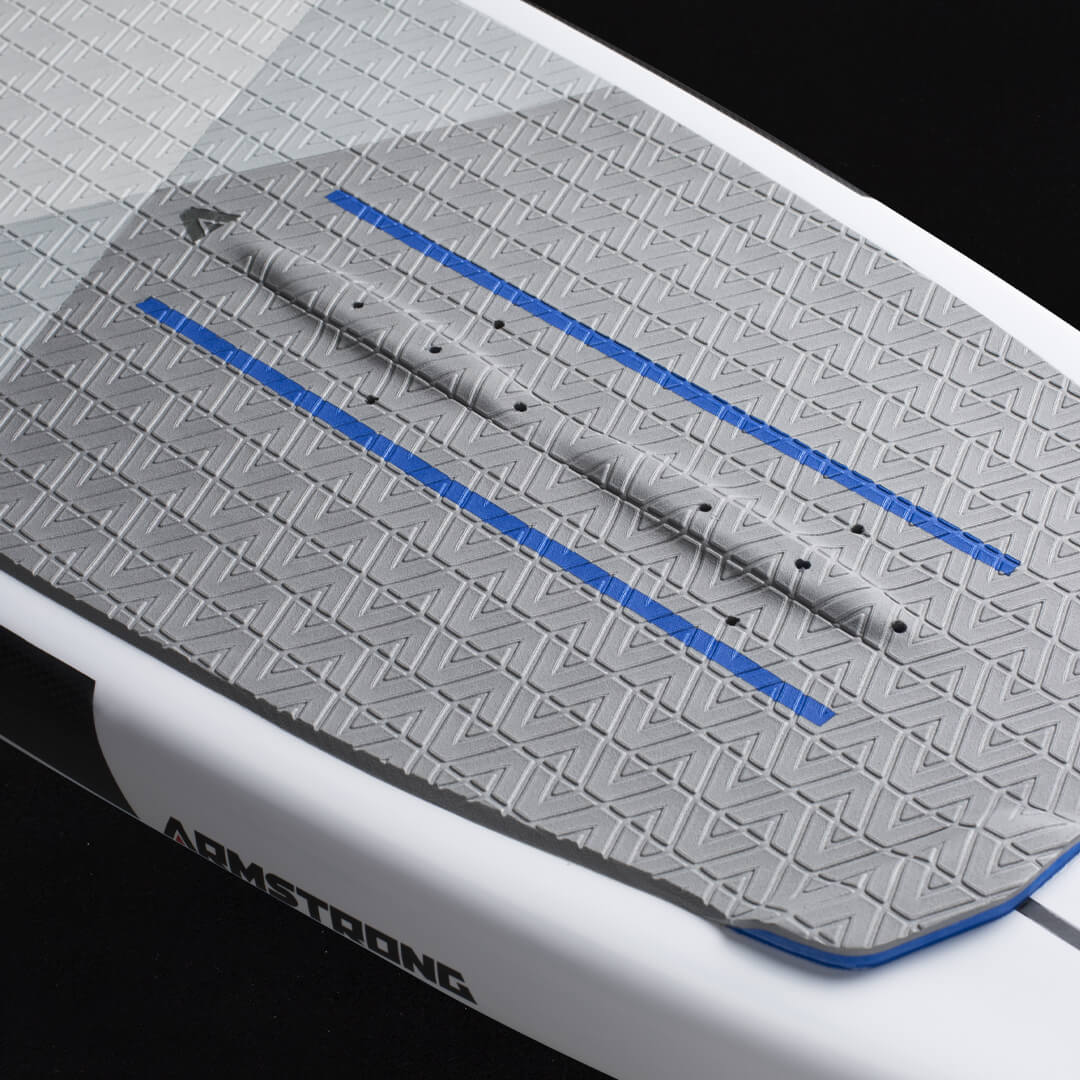
Economical Grip
Pad with micro-cuts, rear kick pad, and foil position markers.
THE TESTS
ARMSTRONG MIDLENGTH FG WINGFOIL BOARD
DAM C'S TEST
ARMSTRONG MIDLENGTH FG WINGFOIL BOARD
Introduction
Here's my review of the Armstrong 55 Midlength board, which I've been using for two months now.
I finally got my hands on a "2-in-1-inch board that I'd been waiting for. This board offers high-performance for both surfoil and wingfoil.
Let's take a detailed look at the design and performance of this Armstrong.
Technical Specifications
This Midlength concept, available in 45L and 55L, allows you to have a single board instead of two for medium to strong wave or wind conditions. It's a very practical, more accessible, and economical idea, you no longer need two boards for these conditions.
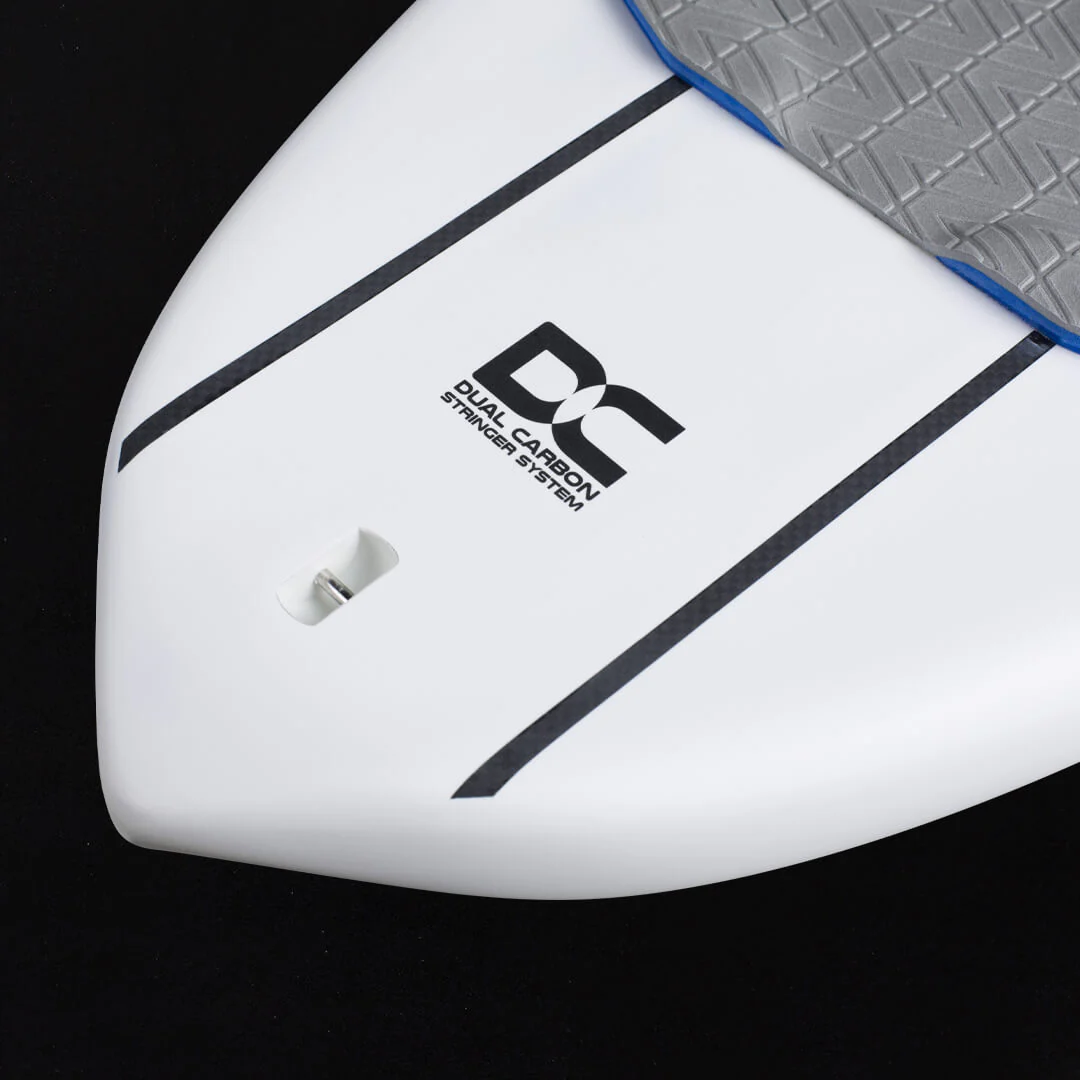
The board is designed with a solid construction featuring a full carbon sandwich deck-rails-hull shape. It also has long carbon fin boxes that allow for optimal mast placement.
However, the straps are not included, but I recommend getting the Armstrong straps, which come with titanium screw sets.
This construction is primarily designed for durability, no matter your use.
Surfoil Performance
The float is a bit longer than typical surfoil boards, but this allows for easier take-offs on small waves.
On larger waves, take-offs can be performed earlier to avoid critical zones and maintain a safety margin.
Truly interesting sensations in surfoil… but what about wingfoil?
Wingfoil Performance
The 55L board allows you to ride from 18 knots and up, offering a freeride-freewave spirit with total freedom for jumping.
The narrow width and flat hull shape allow for quick take-off. However, the board's small width requires a short adaptation period to stand up, especially in lighter conditions.
Once you've got your bearings, take-off remains efficient and smooth.
Solid performance, but what really struck me was the board's comfort and control.
Comfort and control in flight
This board really impressed me in flight, with its easy control and comfort.
The board is quite well-balanced; it's easy to find your footing on both feet. Plus, the board's size doesn't disrupt riding at all, and its width allows for very efficient air penetration.
With this midlength, you go fast and can attack maneuvers with great confidence; tacks, for example, are easily executed in a tight space. Controlled aerial behavior that makes you want to go further and further.
Volume comparison
This board is offered with different options, depending on rider size and conditions. Here are some guidelines for those unsure about the right volume.
Having also tried other larger sizes, namely 65, 75, and 85L, I recommend the 65L as a single board, but also the 75 and 85L, especially in light conditions.
Finally, for use with KWing or Pocket Wing, I recommend the 85L for its stability and gliding efficiency.
Conclusion
The Midlength combines performance and versatility, both in surfoil and wingfoil. The brand therefore offers a solution that is both economical and reliable, and perfectly adaptable.
What's more, the board's look is sublime, and the manufacturing quality is truly outstanding.
Ce qu'il faut retenir
| Section | À retenir |
|---|---|
| Introduction | Here's my review of the Armstrong 55 Midlength board, which I've been using for two months now. |
| Technical Specifications | Ce concept Midlength disponible en 45L et en 55L permet d’avoir une seule planche au lieu de deux pour des conditions de vagues ou de vent médium à fort. |
| Surfoil Performance | Le flotteur est un peu plus long que les boards habituelles de surfoil, cependant cela permet des takes-off plus faciles sur de petites vagues. |
| Performances en wingfoil | The 55L board allows you to ride from 18 knots and up, offering a freeride-freewave spirit with total freedom for jumping. |
| Comfort and control in flight | Cette board m’a vraiment impressionné en vol, avec la facilité de son contrôle et de son confort. |
| Volume comparison | Cette planche est proposée avec différentes options, selon les gabarits et les conditions. |
À considérer
Les points de vigilance et les limites relevés dans cet article :
- However, the straps are not included, but I recommend getting the Armstrong straps, which come with titanium screw sets.
- Performances en surfoil Le flotteur est un peu plus long que les boards habituelles de surfoil, cependant cela permet des takes-off plus faciles sur de petites vagues.
Questions fréquentes
Introduction : ce qu'il faut retenir
Voici mon retour de test de la planche Armstrong 55 Midlength que j’utilise maintenant depuis deux mois. J’ai enfin pu mettre la main sur une planche “2 en 1” que j’attendais depuis un moment.
Caractéristiques techniques : ce qu'il faut retenir
This Midlength concept, available in 45L and 55L, allows you to have a single board instead of two for medium to strong wave or wind conditions. It's a very practical, more accessible, and economical idea, you no longer need two boards for these conditions.
Performances en surfoil : ce qu'il faut retenir
Le flotteur est un peu plus long que les boards habituelles de surfoil, cependant cela permet des takes-off plus faciles sur de petites vagues. Sur des vagues plus conséquentes, les takes-off peuvent être réalisés plus tôt pour ne pas se retrouver dans une zone critique et garder un peu de marge de sécurité.
Performances en wingfoil : ce qu'il faut retenir
La board 55L permet de naviguer de 18 noeuds à beaucoup plus, on retrouve un esprit freeride-freewave avec une liberté totale de saut. La largeur faible et la carène tendue permettent de décoller rapidement.
Confort et contrôle en vol : ce qu'il faut retenir
Cette board m’a vraiment impressionné en vol, avec la facilité de son contrôle et de son confort. La planche est plutôt bien équilibrée, on trouve sans difficulté ses appuis sur ses deux pieds.
Comparatif des volumes : ce qu'il faut retenir
This board is offered with different options, depending on rider size and conditions. Here are some guidelines for those unsure about the right volume.
Une question sur le matériel évoqué ici ?
L'équipe GlissEvolution navigue sur ce qu'elle vend et répond de vive voix, au magasin de Pornichet ou par téléphone.