In wingfoil, the leash is an essential safety device, yet it's often overlooked. There are two types: the board leash and the wing leash, each playing a distinct role. This guide will help you make the right choice based on your skill level, conditions, and riding style.
This Guide in 30 Seconds
- Board leash: prevents the board from drifting after a fall, essential in choppy seas.
- Wing leash: connects the wing to your wrist, mandatory to prevent it from flying away and injuring other riders.
- 3 types of board leashes: waist (recommended), quick-release waist, and ankle.
- 2 types of wing leashes: coiled (durable, anti-drag) and Dyneema (ultra-light, discreet).
- Budget: from €19.99 (waist leash only) to €81 (complete safety leash).
- Tip: regularly check for wear, carabiners, and elasticity.
Table of Contents
Board Leash: Safety and Control
What is a Board Leash For?
The board leash connects the rider to their board to prevent losing it in case of a fall. This accessory is particularly useful at sea, where currents or wind can carry your board away in seconds. Without a leash, you'd be left alone in the water, sometimes hundreds of meters from your gear. It allows you to instantly retrieve your board after a fall, get back to your session faster, and most importantly, ensures your safety. Simple to install, it's compatible with all practices, from freeride to downwind.
Important Limitations to Know
The board leash carries a risk of entanglement: it can get caught underwater or tangle with the wing during tricks. A leash that's too long can drag in the water and snag on the foil, increasing the risk of falls. The tension of the leash during a fall can also bring the board and its foil back towards you at high speed, a real danger if you're not careful. This is why choosing the type of leash-waist or ankle-and its length is fundamental.
Which Board Leash Model to Choose?
The Waist Leash (Recommended)
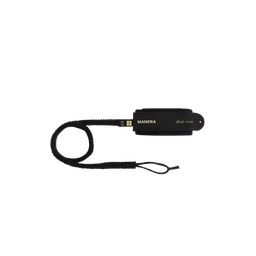
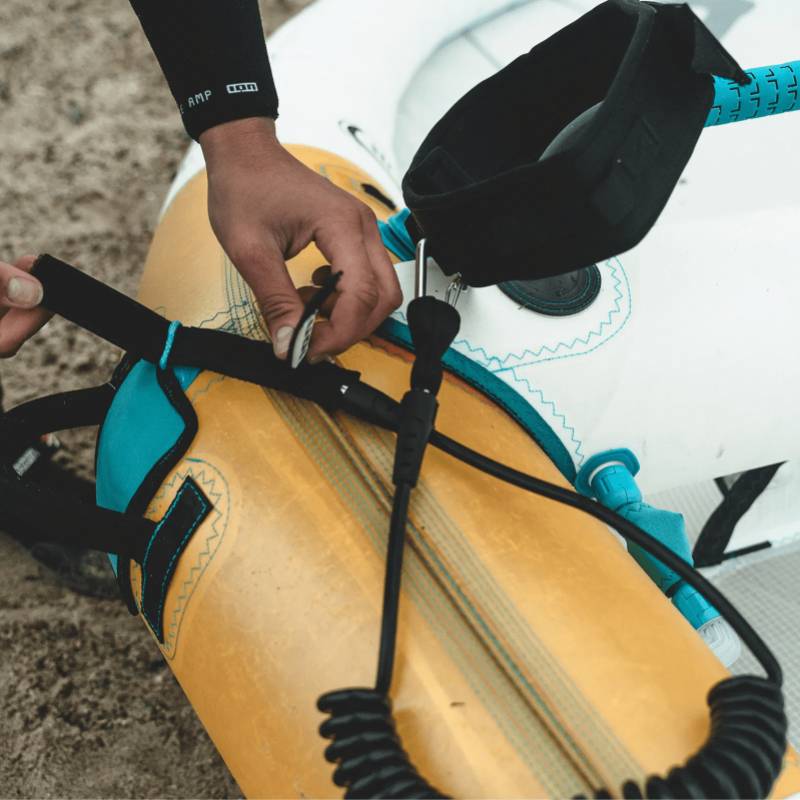
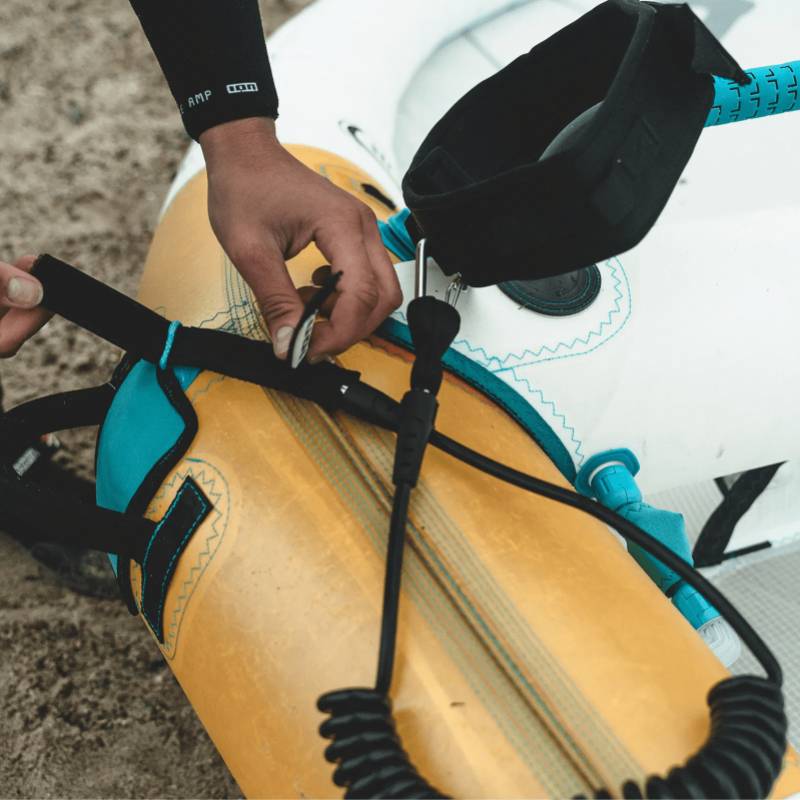
The waist leash attaches to your waist via a dedicated belt. It offers excellent freedom of movement and significantly reduces the risk of entanglement with the foil or your legs. It's the most commonly used model by regular riders, ideal for freeride and long sessions. The board stays connected to your center of gravity, which makes recovery more natural.
The Waist Leash with Quick Release
This model adds a quick release system that allows you to instantly detach from the board in case of danger. Essential in strong conditions, in current, or for riders who go out alone. By pulling the handle, the leash detaches in a fraction of a second. A safety investment that can make a difference in a critical stall situation.
The Ankle Leash
Inspired by surfing, the ankle leash attaches to your ankle or calf. It's the simplest model to use, but it has a major drawback in wingfoil: the leash can wrap around the foil mast during falls, creating a risk of injury. It remains suitable for SUP foil or for beginners in calm conditions, but experienced riders generally prefer the waist leash.
Wing Leash: Keeping Your Wing Under Control
Pourquoi le leash d'aile est indispensable
The wing leash connects the wing to the rider, usually at the wrist. It's mandatory safety equipment: without a leash, a wing released in the wind becomes an uncontrollable projectile that can injure other riders, swimmers, or beachgoers. It's also common sense, as losing your wing mid-session means being stranded without propulsion. A well-chosen wing leash is light, discreet, and doesn't hinder your ride, while maintaining great freedom of movement for transitions and maneuvers.
Limitations of the Wing Leash
During long sessions, a wrist leash can become slightly uncomfortable, especially if the strap is rigid or poorly adjusted. The wing can also wrap around the leash during a violent fall, making recovery more complex. The choice between a coiled leash and a Dyneema leash directly influences comfort and practicality: each type has its advantages depending on the rider's profile.
Which Wing Leash Model Should You Choose?
The Coiled Leash
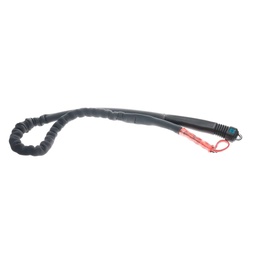
The coiled leash is wound like a spring. This design reduces drag in the water and limits the risk of entanglement. It is more durable than Dyneema and retracts naturally when not under tension. However, it is slightly heavier and stiffer, which can be noticeable during long sessions or technical maneuvers.
The Dyneema Leash (Straight)
The Dyneema leash is ultra-light and flexible. It's completely forgotten while riding, making it a favorite among riders who perform many transitions and tricks. However, it can be a bit more fragile in the long run and may drag in the water if it's not short enough. It's ideal for short, intense sessions or competitions.
Wingfoil Leash Comparison Chart
| Type | Attachment | Main Advantage | Disadvantage | Who is it for? | Budget |
|---|---|---|---|---|---|
| Waist Leash | Waist (hip belt) | Freedom of movement, anti-tangle | Requires a dedicated belt | Freeride, long sessions | 20 to €80 |
| Belt + quick release | Waist with quick release | Quick release in case of stall | Higher price | Strong conditions, solo riders | 65 to €81 |
| Ankle leash | Ankle / calf | Ease of use | Risk of foil entanglement | Beginners, SUP foil | 40 to €52 |
| Spiral wing leash | Wrist | Durable, retractable, anti-drag | Slightly heavier | Freeride, versatility | 26 to €40 |
| Dyneema wing leash | Wrist | Ultra-light, discreet | Less durable, drags if too long | Freestyle, competition | 39 to €65 |
Our leash selection
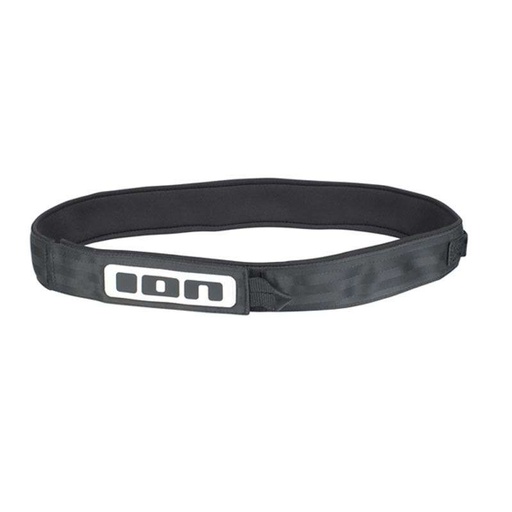 ION Core Hip Beltfrom €19.99
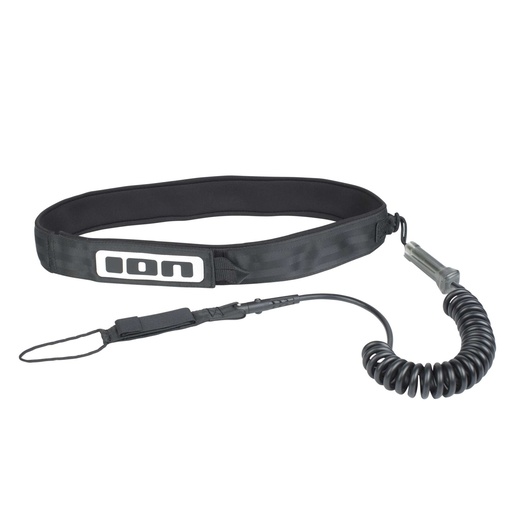 Duotone Wing Core Safety Leashfrom €79.99
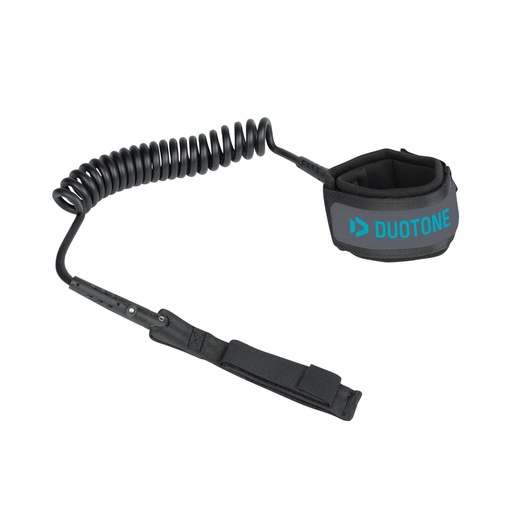 Duotone Wrist Leash Coiledfrom €39
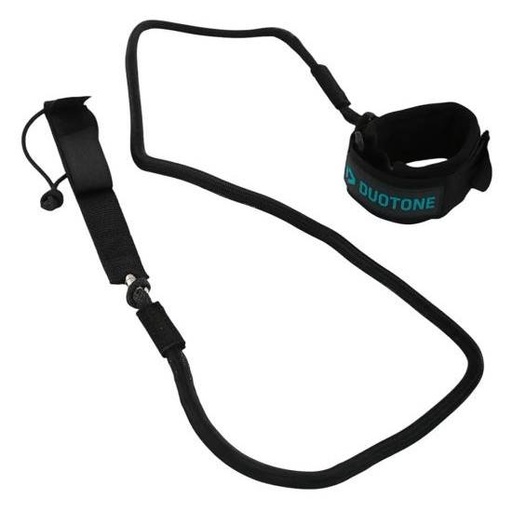 Duotone Wrist Leash Straightfrom €39
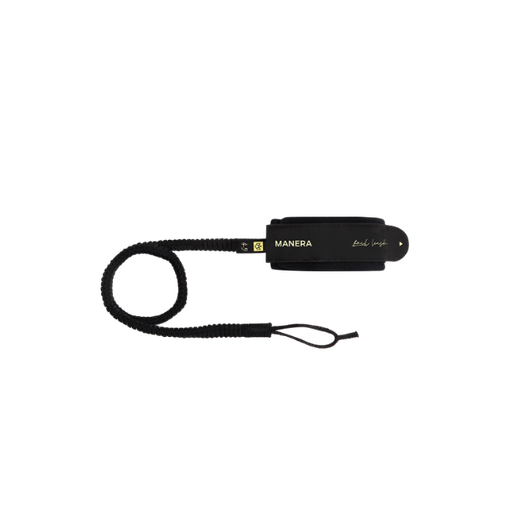 Manera Foil Leashfrom €39.90
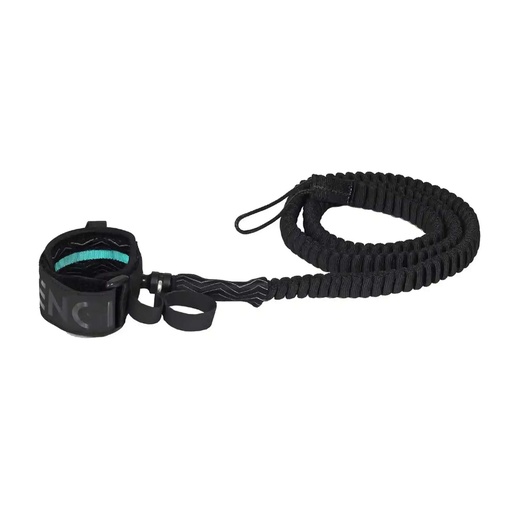 Ride Engine Quick Releasefrom €65
Care Tips and Recommendations
Regular care
A poorly maintained leash can break at the worst moment. Always rinse your leash with fresh water after each session to remove salt and sand. Check the condition of the carabiners, seams, and elasticity at least once a month. A coiled leash that no longer retracts correctly must be replaced. Store your leashes away from direct sunlight: UV rays degrade Dyneema and weaken synthetic materials in the long term.
Choosing the right length
The length of the leash directly impacts comfort and safety. A short leash (less than 1 m) is ideal for freestyle and quick maneuvers, keeping the board close. A long leash (1.5 to 2.5 m) is suitable for downwind and freeride, offering more freedom but a higher risk of snagging. One last recommendation: never use a surf leash for wingfoil. The stresses (foil, speed, specific falls) are completely different, and an unsuitable leash can become dangerous.
FAQ: The Wingfoil Leash
À considérer
Les points de vigilance et les limites relevés dans cet article :
- C'est le modèle le plus simple d'utilisation, mais il présente un inconvénient majeur en wingfoil : le leash peut s'enrouler autour du mât de foil lors des chutes, ce qui crée un risque de blessure.
- Il est toutefois légèrement plus lourd et plus rigide, un détail qui peut se ressentir lors de longues sessions ou de manœuvres techniques.
- En revanche, il est parfois un peu plus fragile sur le long terme et peut traîner dans l'eau s'il n'est pas assez court.
Is a Board Leash Mandatory for Wingfoil?
It's not a legal requirement in most spots, but it's highly recommended. A wingfoil board with a foil drifting on its own poses a danger to other riders. Many clubs and schools enforce it.
Waist Leash or Ankle Leash: Which to Choose?
The waist leash is recommended for wingfoil. It prevents entanglement with the foil mast and offers greater freedom of movement. The ankle leash should be reserved for SUP or very calm conditions.
What Leash Length Should You Choose?
For freeride and freestyle, a short leash (less than 1 m) keeps the board close. For downwind, a 1.5 to 2.5 m leash offers more freedom. Adapt the length to your practice and conditions.
Can a Surf Leash Be Used for Wingfoil?
No, it's not recommended. Surf leashes are not designed for the stresses of foil (speed, fall angle, mast). They can get caught in the foil and create dangerous situations. Always use a specific wingfoil leash.
Coiled or Dyneema Leash for the Wing?
The coiled leash is more durable and retractable, ideal for allround freeride. The Dyneema leash is ultra-light and goes unnoticed, perfect for freestyle and competitions. It's a matter of preference and style.
Why buy from GlissEvolution?
Over 20 years of glisse expertise, advisors who practice and test the gear, responsive after-sales support. Shop in Pornichet, advice in-store or by phone at 09 62 64 74 77.
Need advice on choosing your leash?
The GlissEvolution team helps you find the leash suited to your practice, level, and riding conditions.
View all leashes Contact us Call usSource et limites du guide
Le guide débutant officiel IKO définit le leash comme la liaison entre l’aile et le pratiquant. Les longueurs, fixations et usages présentés ici restent des repères : vérifie toujours la notice du fabricant, l’état du leash, le point d’attache de la planche et les règles locales. En courant fort, vagues, obstacles ou situation d’enchevêtrement, le choix et l’usage d’un système de largage adapté demandent l’avis d’un professionnel.

Guide written by the GlissEvolution team. Leash prices and availability are subject to change: find up-to-date stock in the shop or contact our team.