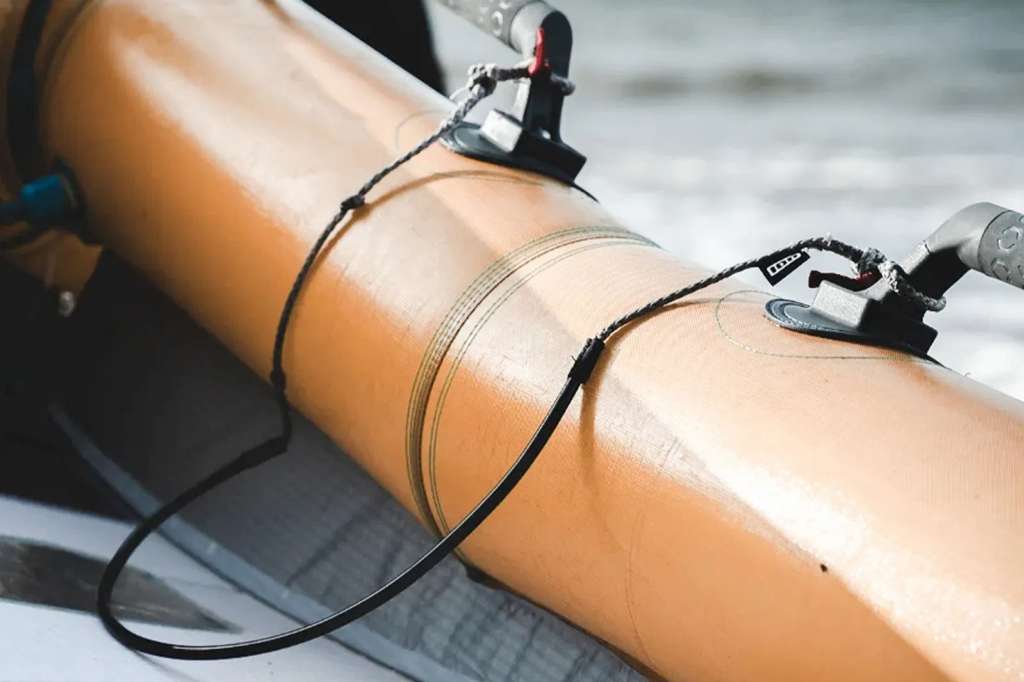
Are you wingfoiling and feeling your arms tire too quickly on long tacks? A harness line is the accessory that will transform your sessions. Often overlooked by beginners, it allows you to transfer some of the pull to your harness, letting you ride longer and more relaxed. In this guide, we explain how to choose the right model for your skill level and style.
Guide written with Kevin Perrin, GlissEvolution wingfoil expert, 21 years of watersports expertise in Pornichet.
A wingfoil harness line is a line that connects your wing to your harness to relieve your arms.
There are three main types: fixed lines (simple and light), Dyneema lines (ultra-light and responsive), and adjustable Vario lines (allround). The choice depends on your skill level, the frequency of your sessions, and the conditions in which you ride. Price: from €20 to €30.
In 30 seconds
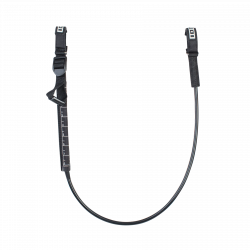
- Beginner → fixed or simple Vario line (ION Wing Harness Line at €20).
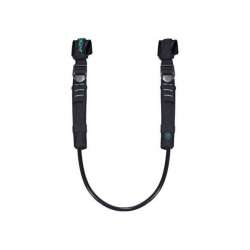
- Long sessions → adjustable Vario line to customize length (ION Vario at €30).
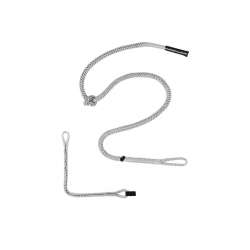
- Lightwind / purist → ultra-light Dyneema line (ION Harness Line Light at €20).
- Allround → adjustable model like Ride Engine (€28).
- Standard length → between 70 and 90 cm depending on your height and wing.
Why use a harness line in wingfoil?
When you hold your wing at arm's length for an hour-long session, fatigue quickly builds up. The harness line allows you to transfer part of the pull to your waist or seat harness. The result: your arms rest, you maintain a more stable position on your foil, and you can ride for longer without getting exhausted.
Kevin systematically uses a harness line as soon as the wind exceeds 15 knots or the session lasts more than 30 minutes.
The advantages of the harness line
- Less arm and shoulder fatigue.
- More stable position on the foil.
- Better upwind performance.
- Longer sessions without pain.
The 3 types of wingfoil harness lines
1. Fixed lines (strap or Dyneema)
Fixed lines are the simplest: a line of defined length that attaches to your wing's handles or boom. No on-water adjustment, just a one-time setup. It's the lightest and most reliable solution.
There are two variants: the classic strap, robust and economical, ideal for beginners; and Dyneema, ultra-light and almost inextensible, for purists seeking maximum responsiveness.
Highlights: minimal weight, simple and durable installation, no on-water adjustment needed, accessible price (€20).
Limitations: fixed length to be defined before the session, less suitable if you frequently change wings.
Recommended for: beginners who want a simple and reliable system, or experienced lightwind riders seeking absolute lightness.
2. Adjustable Vario Lines
Vario lines allow you to adjust the length before or during your session thanks to a manual adjustment system. It's the ideal compromise between simplicity and versatility: you can adapt your setup according to your wing size, wind strength, or your position on the board.
Highlights: widely adjustable length, adaptable to all conditions, quick adjustment even on the water, robust and simple to install.
Limitations: slightly heavier than a fixed model, and it takes a little time to get used to the adjustment system.
Recommended for: intermediate to advanced riders who ride in varied conditions and want to fine-tune their settings.
How to Choose Based on Your Skill Level
| Rope type | Adjustment | Weight | Price | Ideal for |
|---|---|---|---|---|
| Classic fixed | No | Very light | €20 | Beginners, tight budget |
| Fixed Dyneema | Before the session (knots) | Ultra light | €20 | Purists, lightwind |
| Adjustable vario | Before / during | Lightweight | 28-€30 | All levels, versatility |
Kevin's advice
"If you're a beginner, get a fixed model for €20 to get the hang of it. You'll quickly see if you need more adjustments. And if you ride with multiple wing sizes, an adjustable Vario quickly becomes essential."
What length should you choose?
The ideal length depends on your height, your wing's width, and your riding stance. Generally, lengths range between 70 and 90 cm. The goal is to be able to hook into the harness effortlessly while maintaining slight tension in your arms.
| Your height | Recommended length |
|---|---|
| Under 1m70 | 70-75 cm |
| 1m70 to 1m80 | 75-85 cm |
| Over 1m80 | 85-90 cm |
Warning
If you're torn between two lengths, opt for an adjustable model. You'll be able to fine-tune your settings as you use it without having to buy new gear.
How to Install Your Harness Line
Harness lines attach either to the rigid handles or directly to your wing's boom. Depending on the model:
- Scratch/velcro: Quick mounting around the tube, practical for changing wings.
- Fixed buckle: More permanent, stronger installation.
- Sliding knots: Length adjustment before your session (Dyneema).
Good Habits
- Center the line well to avoid imbalances.
- Check that it doesn't hinder your transitions.
- Test the length on land before heading out on the water.
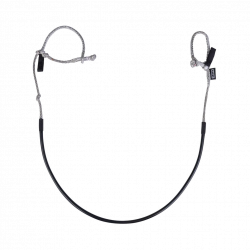
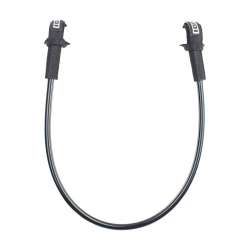
Our Selection of Wingfoil Harness Lines
Frequently Asked Questions
When should you start using a harness line?
As soon as you're riding stably and can hold your wing without too much imbalance. Most riders start after about ten sessions, when they feel the need for more comfort.
Fixed or adjustable Vario line?
If you always ride with the same wing in similar conditions, a fixed line is sufficient. If you often change wing size or spot, the adjustable Vario will offer more versatility.
What length for my height?
Between 70 and 90 cm depending on your height. Under 1m70 → 70-75 cm. Between 1m70 and 1m80 → 75-85 cm. Over 1m80 → 85-90 cm. If in doubt, choose an adjustable model.
How do I attach a harness line to my wing?
The lines attach to the handles or the boom, with velcro or a buckle. Make sure to center the line well to avoid imbalances and check that it doesn't hinder your transitions.
Which harness should I use with a wing harness line?
You can use a classic waist or seat harness (kitesurf or windsurf). The essential thing is that it's comfortable and well-adjusted to your size. There's no need for a specific wingfoil model.
How much does a wingfoil harness line cost?
Between €20 and €30, depending on the model. Fixed and Dyneema lines are €20, while Vario adjustable lines are between €28 and €30. It's a minimal investment for a huge gain in comfort.
Need personalized advice?
We'll help you choose the harness line suited to your skill level and your wing.
Make an appointment Call us See wing accessories
Advice and selection provided by the GlissEvolution team with Kevin Perrin. Prices are indicative for 2026 and are subject to change.